

























































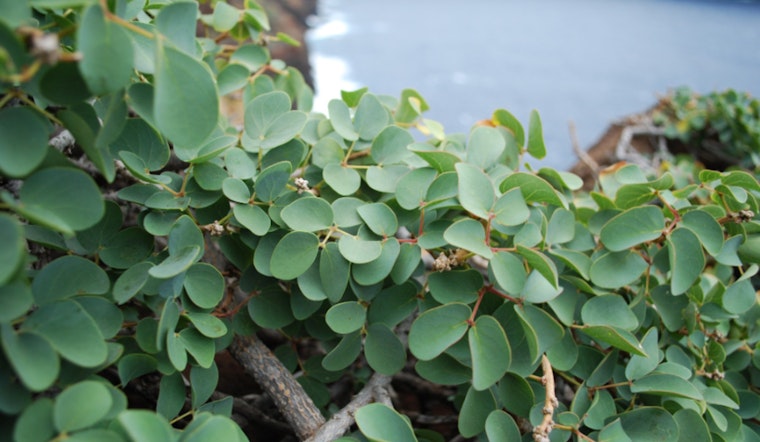
A new website has been launched to provide information on Ka Palupalu o Kanaloa (Kanaloa kahoolawensis), a critically endangered native Hawaiian plant. Found on Kahoʻolawe, the plant has survived despite the island’s history of U.S. Armed Forces bombing drills. The website aims to increase awareness of the species and its cultural significance in Hawaii, as reported by the Department of Land and Natural Resources.
Ka Palupalu o Kanaloa, a plant missing from pollen records since the 16th century, was rediscovered in 1992 by National Tropical Botanical Garden botanists Ken Wood and Steve Perlman on Kahoʻolawe, Hawaii. It was identified by matching its pollen to unidentified fossil records. The last two known wild plants died by 2015. By 2020, only two cultivated plants remained at the National Tropical Botanical Garden. Both bloomed simultaneously, and one produced seeds, contributing to conservation efforts, according to the Department of Land and Natural Resources.
The population of Ka Palupalu o Kanaloa has grown to around 20 plants through the efforts of organizations such as the Department of Land and Natural Resources Division of Forestry and Wildlife and the Kahoʻolawe Island Reserve Commission. Dr. Mike Opgenorth of National Tropical Botanical Garden stated, "This partnership is vital for the survival of Ka Palupalu o Kanaloa because even the best horticulturist in the world will not have success 100% of the time. Agency or individual—it’s a team effort that shares the responsibility for perpetuating the plant." A new website provides information on the plant’s botanical and cultural significance, along with educational resources. Division of Forestry and Wildlife botanist Dr. Matt Keir added, "Together we can grow a brighter tomorrow for Ka Palupalu o Kanaloa." The project aims to support ongoing conservation efforts.





