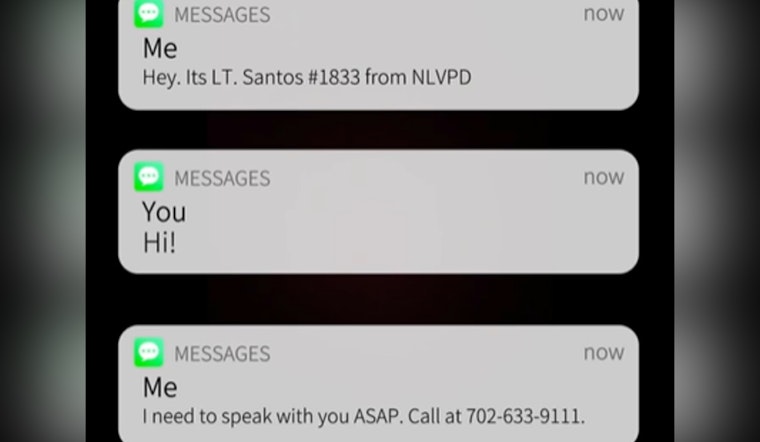
In a recent announcement by the North Las Vegas Police Department (NLVPD), residents of the local area are being cautioned about a new wave of text message scams that are hitting their phones with alarming frequency. Perpetrators impersonate law enforcement officials, often deploying sophisticated tactics such as using official names, badge numbers, and courthouse addresses to create a semblance of credibility. Victims are being falsely accused of missed jury duty or other legal offenses and are pressured to cough up fines through these deceitful communications.
"Scammers are posing as law enforcement, using official names, badge numbers, and courthouse addresses to intimidate victims into paying fines for missed jury duty, identity theft, or other offenses," the NLVPD shared in a social media post. This kind of scam is particularly insidious as it plays on fear, and the natural inclination of individuals to resolve supposed legal issues quickly, and without public embarrassment. However, the NLVPD assures that such calls and messages are, unequivocally, not legitimate. They stress a crucial fact, a fact rooted in protocol: "law enforcement will NEVER ask for credit/debit card numbers or gift cards."
In their continued efforts to educate and empower the public against this breed of fraud, the NLVPD has laid out clear guidelines on how to handle these distressing occurrences. Residents should never provide personal or financial information to unknown callers, and most definitely not react to demands for bank details, Bitcoin, or other cryptocurrencies. Instead, the NLVPD urges those targeted by the scam to verify any such demands by contacting the court or law enforcement agencies directly.
For those who find themselves on the receiving end of these scams, the NLVPD has provided concrete next steps: "Verify the call by contacting the court or law enforcement directly. Report scams to the FBI and Federal Trade Commission at reportfraud.ftc.gov," the NLVPD advises. Victims are encouraged to maintain a layer of safety and anonymity while reporting crimes by filing their grievances without revealing their identities. In a landscape rife with digital deception, staying wary and protective of one's personal information is more pertinent than ever.