

























































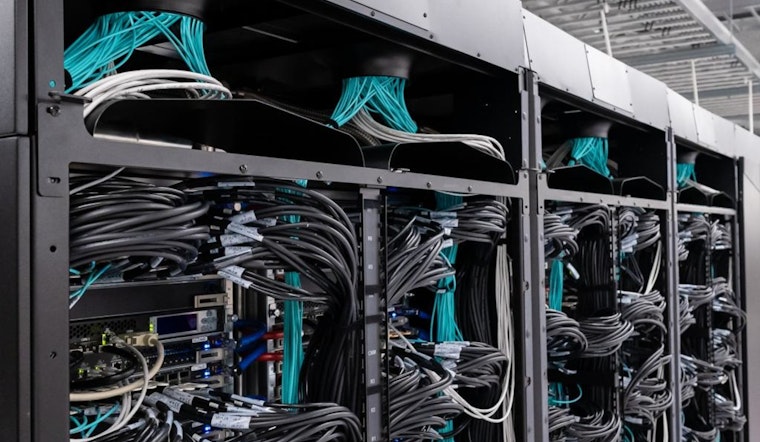
In a significant leap for supercomputing, a team from the Department of Energy's Oak Ridge National Laboratory (ORNL) and the University of Tennessee, Knoxville, have created a memory management tool that increases data storage efficiency, as originally reported by their press release. This new application is designed to manage memory in a way that prevents data from overwhelming traditional memory systems and hindering performance, which is crucial for machines like ORNL's exascale supercomputer Frontier.
The project, known as the ECP Simplified Interface to Complex Memories (SICM), operates under the Exascale Computing Project (ECP), a comprehensive initiative focusing on software research and development, researchers are working on the deployment of this technology to better structure memory systems based on data use necessity, addressing the issue that while faster memory systems enhance information retrieval, they are resource-intensive, and their slower counterparts can house more data but operate with less speed. "Our work is to automatically put the frequently used objects into the right location in the faster tier of memory and put the less used objects, the things that aren't accessed as often, into the slower memory," Terry Jones, a senior computer science researcher at ORNL, told the press. Jones also explained that their research outperforms earlier strategies that were less adept at data management.
Previously, memory systems primarily utilized a "first touch" principle, essentially filling the fastest memory areas with data that may not be needed after a program's initiation. The SICM system, however, automates the process of data storage according to its necessity, allowing for more efficient retrieval and enabling developers to create programs optimized for the capabilities of supercomputing systems. This technological advance, as reported by ORNL, promises to facilitate the execution of multiple programs with varying storage demands within a single supercomputer rack, utilizing an emerging technology called CXL.
"Imagine that within a rack of a supercomputer there’s a lot of memory, and all the nodes inside that same rack could get whatever they need from that memory," Jones said describing a scenario where an AI application, requiring substantial memory, and a program conducting a complex calculation on a smaller dataset, warranting less memory, could dynamically share resources, enhancing overall system efficiency. These novel features of SICM hold the potential to transform how memory is allocated and managed among computing processes that run concurrently. This advancement has serious implications not just for ORNL's supercomputing prowess but for the broader field of high-performance computing, ushering in an era where computational limitations are increasingly mitigated by smarter software designs.
These findings were recently accepted for publication in well-regarded academic journals such as the ACM Transactions on Architecture and Code Optimization and the International Journal of High-Performance Computing Applications, indicating peer-reviewed recognition of their significance. ORNL's research is supported by the Department of Energy’s Office of Advanced Scientific Computing Research and is nested within the Exascale Computing Program, representing a joint initiative of DOE’s Office of Science and the National Nuclear Security Administration. The results that emerge from these efforts directly contribute to the mission objectives of the Office of Science to tackle some of the most pressing scientific challenges of our time.



