

























































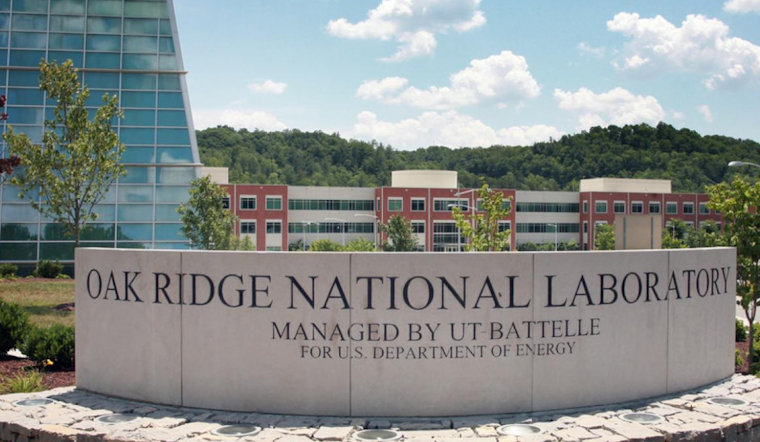
Researchers at the Department of Energy's Oak Ridge National Laboratory (ORNL) and from Budapest, Hungary, are investigating a certain drought-resilient plant known as the Never Never plant, or Ctenanthe setosa. Taking a cue from nature, these researchers aim to apply the plant's survival secrets to improve the drought resistance of cultivated crops. A recent report by Oak Ridge National Laboratory detailed this interdisciplinary work, spotlighting how small-angle neutron scattering was used to study the plant's water conservation mechanisms amid a broader effort to prevent crop losses due to drought.
Drought is a well-documented peril to agriculture, with Texas citing a staggering $4.8 billion hit due to this natural hazard in the past, according to the American Farm Bureau Federation. The stakes are high to seek out and apply strategies that mitigate such risks effectively. In a study published in Physiologia Plantarum, findings from the Never Never plant present a growing understanding of potential pathways forward. Renáta Ünnep, one of the researchers from the HUN-REN Centre for Energy Research in Budapest, underscored this point. "We quickly realized our research would greatly benefit from using neutrons," Ünnep explained, as per Oak Ridge National Laboratory, noting the nondestructive nature of neutrons when observing the nanoscale structures pivotal to the plant's survival during drought.
ORNL's Spallation Neutron Source (SNS) and its enhanced capabilities shone in this research endeavor. The Extended Q-Range Small-Angle Neutron Scattering Diffractometer (EQ-SANS) at SNS stands out for its bright neutrons and world-class instruments. "This was the first time that fully intact plants under drought-related stress conditions and the recovery process were observed minute by minute," Katalin Solymosi, a plant biologist involved in the study, stated in the ORNL article.
As evident through this focused research, there exists potential for transformative applications in agriculture. The SNS, a DOE Office of Science user facility managed by UT-Battelle for the DOE's Office of Science, showcases the commitment to addressing some of the most pressing ecological and agricultural challenges.





