

























































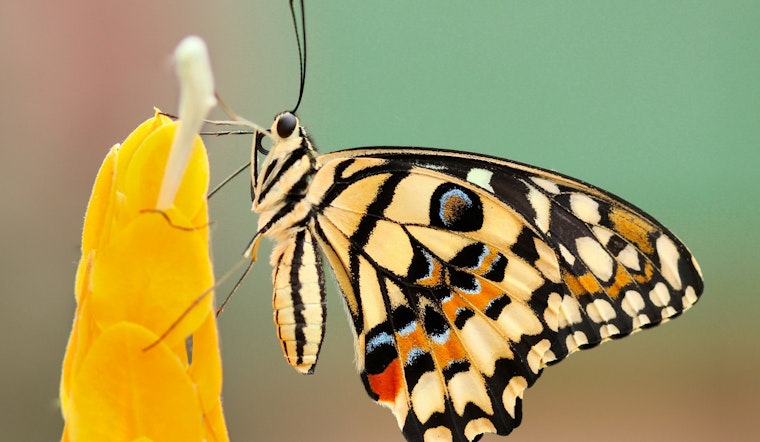
In a recent barrage of findings that portray a grim outlook for our fluttery friends, scientists have reported a significant decline in the butterfly population across the United States. Michigan State University researchers have put their brains together only to uncover a reduction that speaks volumes about the health of our ecosystems. According to a study published in the esteemed journal Science, a whopping 22% decline in butterfly abundance was observed from data spanning two decades.
Now, if you're one to shrug at percentages, let’s snap it into perspective. We’re talking about a quarter less than what fluttered around in the year 2000, as per MSU research findings reported by WWJ’s Jon Hewett. Nick Haddad, MSU professor of integrative biology, expressed disbelief at the "unbelievable" results that consistently showed declines across various studies. “Across the United States, across different studies, people collecting data in different ways, found a consistent result,” he said, according to Audacy. And we can't sideline the implications here: butterflies are indispensable pollinators and a crucial link in the food chain, being a substantial food source for birds.
As if watching numbers dwindle wasn’t enough, the impact of the disappearing act ripples through the financial realm as well. Haddad's student dropped some hard-hitting facts about the role butterflies play in pollinating cotton in Texas, hinting at a substantial economic contribution amounting to tens of millions, as reported by WWJ’s Jon Hewett. Another recent publication from the same institution, detailed by MSU Today, echoes this sentiment. It leverages more than 76,000 surveys and reiterates the sharp 22% decline in butterfly numbers, stressing the urgency for conservation interventions.
Elise Zipkin, the formidable number-crunching Red Cedar Distinguished Professor of quantitative ecology at MSU who co-authored the paper, spoke with MSU Today, depicting the declines as “distressing” and calling for “broad-scale conservation interventions.” Haddad added local color, asserting that his own neighbors have observed fewer butterflies, a change that now has solid data to back it up. Gleaning from their remarks, it is clear that butterflies aren’t just indicators of a healthy environment but are active participants in it.
It’s not only the naturalists who are paying heed to the implications of this precipitous drop. Bridgemi has dived into the findings too, reporting a stark vision where well-loved species, like the incomparable monarchs have seen their numbers cut down by more than 90% since the 1990s. “For those who were not already aware of insect declines, this should be a wake-up call,” said Collin Edwards, the study’s lead author and a data scientist at the Washington Department of Fish and Wildlife. The study published in Science doesn't sugarcoat it: human impacts such as habitat destruction, climate change, and pesticide use have set us on this sorry trajectory.
However, Zipkin and Edwards both emphasize that recovery isn't a pipedream. With "prolific" reproductive capabilities, butterfly populations could bounce back if given the chance. That's where we come in; individuals and policymakers alike hold sway over the fate of these delicate creatures. From planting native flora to enacting more stringent pesticide regulations—there's potential for turnaround.





