

























































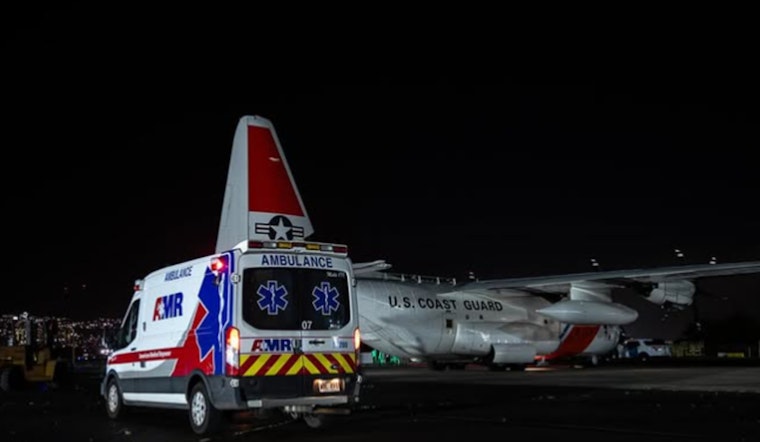
An extraordinary distance of over 4,200 nautical miles was covered by an HC-130 aircraft from the United States Coast Guard Air Station Barbers Point to rescue a U.S. government employee facing a life-threatening medical emergency in the Marshall Islands. As detailed in a social media post by the USCG Hawaii Pacific, the aircrew embarked on a mission Thursday to swiftly transport the patient to the Queen's Medical Center in Honolulu for higher-level care.
The patient was stationed at the U.S. Army Garrison Kwajalein Atoll when the crisis occurred. The mission, which entailed a grueling 14-hour flight, was successfully carried out thanks to the coordinated efforts of the U.S. Coast Guard and the Army. "We appreciate the close coordination with the Army that made this complex mission possible," LCDR Jesse Harms, search and rescue mission coordinator, has been quoted as saying. "It's our privilege to assist someone in need and ensure they reach higher medical care," a statement obtained by the USCG Hawaii Pacific.
The logistics involved in the medical transport were considerable; traversing the expansive Pacific Ocean presents a range of challenges from planning to execution. Yet, the U.S. Coast Guard has a longstanding history of performing life-saving operations in remote and hard to rapidly reach locations, showcasing the commitment and adaptability of its service members when confronted with emergencies.
These missions are more than a demonstration of skill and endurance; they embody a crucial feat of cooperation between military branches. "It's our privilege to assist someone in need and ensure they reach higher medical care," Harms re-emphasized, highlighting not only the human aspect of the operation but also the preparedness and duty that underpin such critical endeavors.





