

























































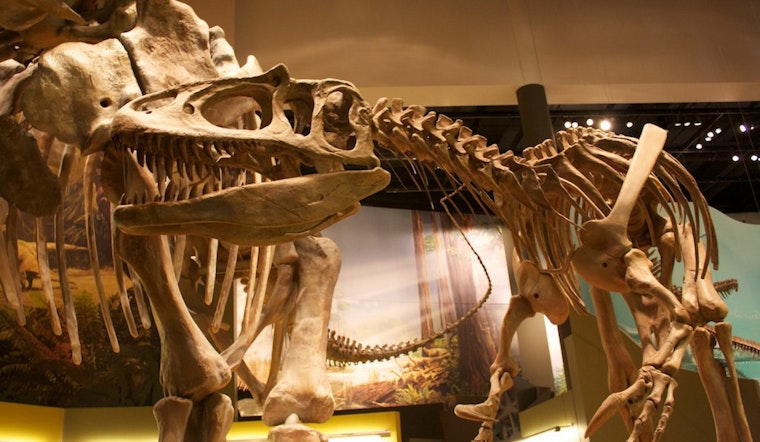
Museum collections, harboring the likes of ancient artifacts to dinosaur bones, are more than just exhibits; they're data-rich resources ripe for scientific exploration, according to recent insights shared by The Conversation. As precious as this data may be, the work to standardize and organize it across various fields presents a formidable challenge, complicating efforts to make it more widely accessible for educators and researchers alike. A report from The Conversation explains that while these collections are vast, what's shown to the public is merely a subset of the treasures they hold.
One of the main obstacles, as Professor Bradley Wade Bishop of Information Sciences revealed, is that individual museum collections each follow their unique data management protocols, which results in a labyrinthine task for anyone hoping to traverse the distinctive systems in search of knowledge. The Conversation stated, "each collection’s staff has its own way of organizing data, so navigating these collections can prove challenging." This heterogeneity not only hinders cross-disciplinary work but also clouds potential synergies between the physical and the increasingly important digital realm of museum resources.
The University of Tennessee, an affiliate of The Conversation, stakes a position at the crossroads of the issue, championing a better grasp of influential research through journalistic collaboration. The University underscores the importance of making this wealth of data more workable and searchable not just for academics, but also for an informed public thirsty for knowledge and understanding.
AI, as Professor Bishop's work suggests, could be the key to streamlining these cumbersome systems, potentially allowing a centralized, simpler path to information; though Bishop warns that harmonizing the diverse cataloging methods in existence will be no simple feat, yet with AI's integration, we could be on the cusp of democratizing access to data that has, until now, been locked away in silos with only the cryptic keys of various museum methodologies to unlock, what promises to be an evolution towards a more interconnected approach to museum data management stands as a testament to the tech's transformative power, as presented by The Conversation. The implications for research, education, and broader public engagement are substantial, paving the way for a more inclusive and insightful exploration of our natural and human history.





