

























































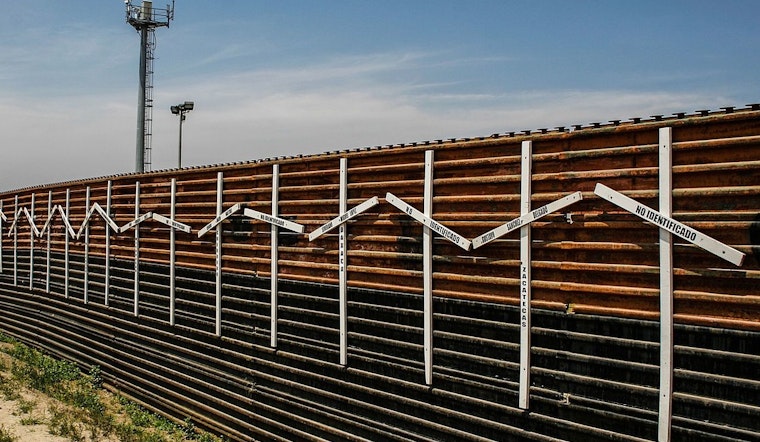
The long-awaited development for enhancing border security infrastructure at the San Diego-Baja California border region is finally seeing progress. U.S. Transportation Secretary Sean P. Duffy confirmed the execution of a $150 million federal grant that aims to underpin the construction of a new road and Port of Entry facility in Otay Mesa. This strategic move is designed to bolster the capabilities of Customs and Border Protection (CBP) with cutting-edge inspection facilities tailored for contemporary border security challenges. Notably, the new agreement has seen the removal of prior provisions lobbed from the Green New Deal, including mandates for zero-emission vehicle charging stations—requirements which, according to Duffy, squandered taxpayer dollars and diverged from the core objectives of national security.
The announcement, heralded by the Transportation Department, marks a significant shift from what Duffy described as two years of lethargic attention from the previous administration. "Thanks to the prior administration’s lack of focus, this critical project sat in limbo for two years. No more," he stated, emphasizing the newfound velocity given to a project initially granted funding in September 2022 through the Nationally Significant Multimodal Freight & Highway Projects (INFRA) program.
The Otay Mesa East Port of Entry has been envisioned as a conduit to not only tighten security but also to facilitate smoother traffic for legitimate trade and travel between the U.S. and Mexico. The grant allocation forms part of a broader departmental mandate to work through a backlog of grants that have allegedly stagnated under the purview of Duffy's predecessors. The Secretary was pointed in his critique, underscoring the Department's commitment to delivering tangible results, bypassing what he called "pointless Green New Deal priorities."
In the face of the complexity that the border region holds, with its intense comings and goings, the developmental focus seems firmly anchored on pragmatism over politicization. The pivot away from the previous Green New Deal stipulations reflects a clear prioritization of immediate operational needs over environmental considerations frequently seen as integral to future policy planning. Duffy's candid appraisal, dismissing the zero-emission vehicle prerequisite as a misappropriation of funds, signals a direct challenge to the overarching framework of the Green New Deal, which proponents argue is crucial in confronting climate challenges while revamping infrastructure.
Securing a more robust border while simultaneously expediting the movement of goods and individuals represents a dual gain in the administration's eyes. Setting a precedent for data-driven and practically aligned decisions in infrastructure projects, carrying both national security and economic implications, holds center stage in the ongoing discourse.





