

























































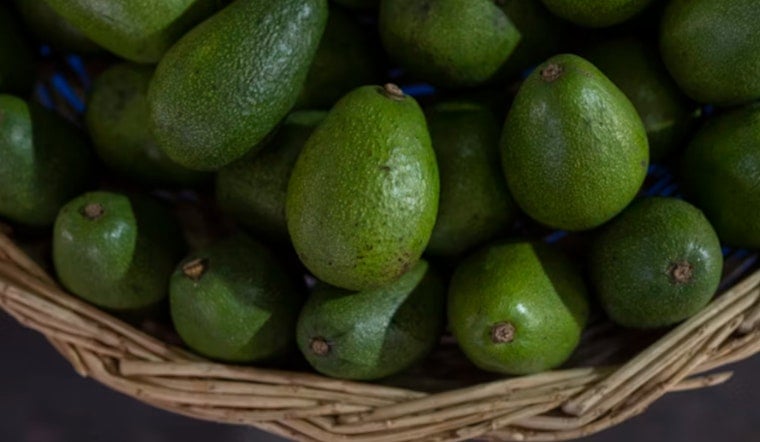
The U.S. government has suspended safety inspections of avocados destined for American grocery stores in Michoacán, Mexico, pulling government personnel out of the region this week after a security threat. The pause follows the arrest of a cartel leader accused of extorting the avocado industry in the area around Los Reyes, a hub of the state's massive avocado trade.
Cartel Leader's Arrest Prompts Immediate Halt
U.S. Ambassador to Mexico Ronald Johnson welcomed the arrest of Alfonso Fernández Magallón, known by the alias 'El Poncho,' who authorities say leads a local cartel operating in the avocado-growing region around Los Reyes, according to WPBF. The U.S. government had also offered a reward for Fernández Magallón's capture before he was taken into custody, per the same report. The U.S. Embassy issued a security alert without specifying the nature of the threat, and Washington subsequently suspended all of its government operations in Michoacán, citing a threat to U.S. interests.
Michoacán Governor Alfredo Ramírez Bedolla said the priority was to ensure the security conditions necessary for inspection operations to resume normally, adding that the temporary halt was meant to safeguard workers following arrests linked to extortion. A local official identified as Antonio Cruz confirmed that the arrested man was known as El Poncho, though he said his department was not aware of any direct incidents involving avocado inspectors themselves, per the same report.
Security Forces Flood Los Reyes as Inspectors Pull Back
Mexican security forces deployed 300 personnel to the Los Reyes area as a preventive measure following the arrest, the report noted. At least four cartels operate in Michoacán, extorting money from residents and businesses including the avocado industry, and the Trump administration has designated all four as terrorist organizations. Avocado cultivation generates roughly 200,000 jobs in Michoacán, which remains the leading exporter of avocados to the United States.
The U.S. Department of Agriculture sends its own personnel into Mexico to monitor plantations and packing houses, ensuring exported avocados are free of pests, since the inspections are a prerequisite for shipping the fruit to the United States. Inspectors from the agency's Animal and Plant Health Inspection Service check orchards and packing plants for quarantine pests like the avocado seed weevil under bilateral phytosanitary protocols in place since the late 1990s, according to the California Avocado Commission.
Not the First Time: A Recurring Security Pattern
This is not the first time threats and violence against inspectors have forced Washington to pull personnel from Michoacán. In February 2022, U.S. authorities halted all Mexican avocado inspections in the state after an inspector in Uruapan received a threatening cell phone message, pausing exports for about a week just days before the Super Bowl, according to AP News. In June 2024, the agency again suspended avocado and mango inspections after two inspectors were assaulted and detained during a protest in Aranza before being released, as reported by The Guardian.
Michoacán's dominance means these disruptions ripple widely, though the impact is no longer total. In 2022, Jalisco became the second Mexican state authorized by the USDA to export Hass avocados to the United States, giving the market an alternative supply whenever Michoacán operations face security disruptions, per The Packer. Michoacán, however, was previously the only Mexican state certified for U.S. avocado exports and still supplies the vast majority of the fruit.
Cartels Extort Michoacán's 'Green Gold'
The industry's vulnerability to organized crime stems from its enormous value. Cartels in Michoacán routinely extort avocado growers and packers with monthly protection payments calculated per cultivated hectare or exported kilogram, targeting what's locally known as 'green gold,' according to InSight Crime. Criminal groups in the state have also been linked to land grabs and illegal deforestation to establish new avocado groves.
Billions of Dollars Riding on Every Shipment
The financial stakes are steep. Mexico sold $3.65 billion worth of avocados to the United States in 2025, and shipments rose 35% during the first four months of 2026 compared with the same period a year earlier, the report said. Mexico is on track to export about 1.2 million metric tons of avocados to the U.S. this year, out of a projected record global export volume of 1.31 million metric tons, according to Reuters. Mexico's avocado producers and packers association reported that fruit received at packing houses on Wednesday could be unloaded but not processed, with no export shipments cleared that day, the same wire service noted.
The stakes are heightened by how reliant American shoppers have become on Mexican avocados. The same report put Mexico's share of all avocados imported into the United States at approximately 80%, while the USDA Economic Research Service has placed the country's share of import volume nearer 88% to 90%. Overall, the U.S. relies on foreign imports for roughly 90% of its domestic avocado supply, and U.S. per capita consumption has surged from about 1.5 pounds in the late 1990s to 8 to 9 pounds annually by 2023, more than a five-fold increase, per the same agency.
Mexico Looks to Diversify Beyond Michoacán
Efforts to reduce dependence on any single, cartel-plagued region continue. Avocado producers in the State of Mexico — the country's third-largest producing state, with nearly 145,000 metric tons annually — are still awaiting USDA authorization to begin exporting fruit to the United States, according to FreshFruitPortal.com. Until that clearance comes, or until security stabilizes in Los Reyes, Michoacán growers, packers and the American shoppers who buy their fruit remain exposed to the kind of disruption that has now paused inspections for a third time in recent years.





