

























































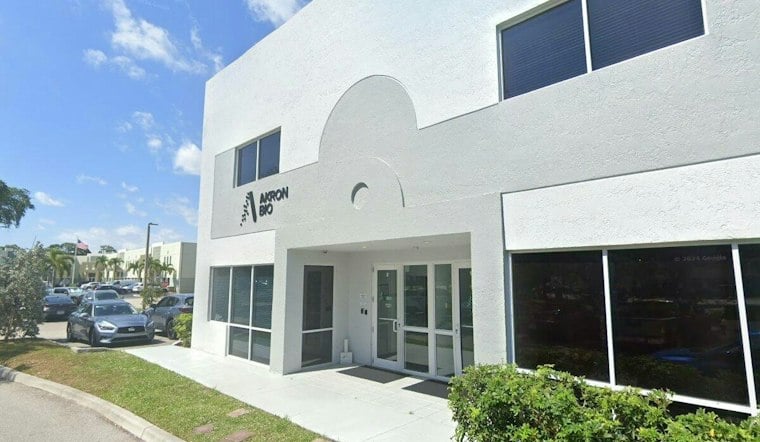
MaxCyte, a cell-engineering technology company based in Rockville, Maryland, announced Tuesday a definitive agreement to acquire Akron Bio, a Boca Raton, Florida-based supplier of materials used in cell therapy manufacturing, for total consideration of $151.8 million. The deal, paired with a new credit facility of up to $75 million, is designed to nearly double MaxCyte's revenue base and push the publicly traded company toward profitability.
According to citybiz, MaxCyte is acquiring Akron Bioproducts LLC from affiliates of Arcline Investment Management, a firm with more than $30 billion in assets under management that will receive MaxCyte shares as part of the consideration and retain an ownership interest in the combined company. The $151.8 million package includes cash, MaxCyte stock and deferred payments, structured to spread the cost over several years rather than all at once.
Per the terms detailed in MaxCyte's investor relations announcement, the company will pay $105 million in cash at closing, subject to customary adjustments, and issue 20,639,733 common shares valued at approximately $26.8 million based on the November 9 closing price. MaxCyte will also make two guaranteed deferred payments of $10 million each, due in January 2028 and January 2029, bringing the total package to $151.8 million.
Why Akron Bio Fits MaxCyte's Playbook
Akron Bio supplies GMP-grade reagents and ancillary materials used in cell and gene therapy development and production, with a portfolio spanning cytokines, growth factors, human plasma-derived products and specialty media. The company also provides manufacturing services for specialized reagents, and its materials are used in both viral and non-viral cell therapy manufacturing, the same filing notes. Together, MaxCyte and Akron Bio supply products that are incorporated into customers' validated manufacturing processes and regulatory filings, including drug master files and biologics license applications.
MaxCyte expects the combined company's products to be embedded in the workflow of five commercially approved therapies and to support more than 100 clinical programs. The company also anticipates sales opportunities for Akron's products through its existing commercial organization, citing limited customer overlap between the two businesses. Akron Bio is expected to continue operating under its existing brand, with its leadership team and employees playing a role in the combined business going forward.
MaxCyte President and CEO Maher Masoud said the acquisition marks a new chapter, expanding the company's presence across viral and non-viral cell therapy development and manufacturing while nearly doubling revenue and accelerating the path to profitability, according to the same release.
The Money Behind the Deal
To help fund the transaction, MaxCyte secured a credit facility of up to $75 million from MidCap Financial, comprising a $55 million term loan and a $20 million revolving credit facility. At closing, the company expects to draw $20 million from the term loan and $2 million from the revolving facility, and plans to use that financing along with existing cash to support operations through profitability. MaxCyte expects to have approximately $40 million to $45 million in cash at closing and anticipates reaching profitability without fully drawing down the credit facility.
The deal is expected to close before the end of 2026, subject to customary closing conditions, and notably requires neither a financing condition nor stockholder approval, the investor relations filing states. Stifel is serving as MaxCyte's exclusive financial advisor and financing agent, while Sidley Austin LLP is providing legal counsel to MaxCyte. On the Arcline side, Jefferies LLC is serving as the firm's exclusive financial advisor, with Bass, Berry & Sims PLC and Fredrikson & Byron, P.A. acting as Arcline's legal advisors.
Akron's Numbers Could Narrow MaxCyte's Losses
Akron Bio is expected to generate approximately $28 million in revenue and $7 million to $8 million in EBITDA in 2026, with positive cash flow, a projection that stands in sharp contrast to MaxCyte's own recent financial profile. MaxCyte reported third-quarter 2026 revenue of $10.2 million, up 49% from the same period a year earlier, as reported by BioSpace. The company also raised its full-year 2026 revenue guidance, excluding the impact of the Akron acquisition, to at least $34.5 million.
MaxCyte's third-quarter 2026 net loss came in at $4.8 million, an improvement from a $12.4 million net loss in the same period of 2025, according to a MaxCyte press release distributed by GlobeNewswire. MaxCyte projects that Akron's positive earnings and cash flow will help reduce the combined company's annual cash burn to less than $10 million in 2027, as noted by Investing.com. For a company whose third-quarter net loss was lower than in the same period of 2025, folding in a profitable, cash-generating supplier could mark a turning point toward sustainable operations rather than continued reliance on outside capital.





