

























































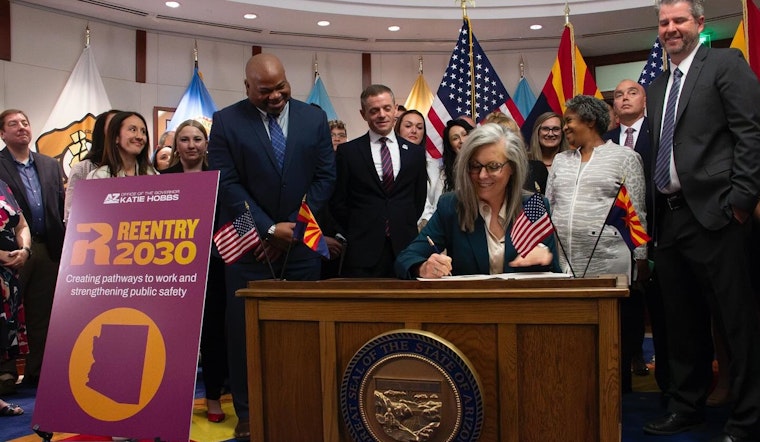
Following a recent executive order by Governor Katie Hobbs, Arizona has embarked on an ambitious project aimed at improving the reintegration of formerly incarcerated individuals into society. The initiative, known as Reentry 2030, seeks to collaborate with the U.S. Department of Justice's Office of Justice Programs and the Council of State Governments (CSG) to create better employment opportunities and consequently enhance community safety. In a statement made by the Office of the Arizona Governor, Hobbs expressed that providing pathways to work is key to public safety and fiscal responsibility, highlighting the significance of second chances for those who have served their time.
The program aims to reduce recidivism through a combination of workforce development, apprenticeships, and vocational training, recognizing the potential benefits not just to the individuals involved but to the state's economy at large. As outlined in the executive order, ADCRR Director Ryan Thornell remarked on the importance of rehabilitation services, including job training. "Good public safety is about ensuring individuals in our custody have access to rehabilitative services, especially quality job training," Thornell told the Office of the Arizona Governor. Employers who train and hire formerly incarcerated folks are seen as integral to the economic and social strength of communities.
Statistics from Arizona suggest that one in three residents has a criminal record, and a significant majority of incarcerated individuals will eventually reenter society. Nevertheless, less than half of those released from the state's prisons find employment within a year—an issue Reentry 2030 is designed to address. According to the Office of the Arizona Governor, reducing recidivism not only saves state funds but also bolsters the economy by fulfilling crucial workforce gaps.
DES Director Michael Wisehart praised the initiative's comprehensive approach, which promises to positively impact not only the individuals seeking employment but also their families and state employers. "The Reentry 2030 initiative promises to make a considerable difference in the lives of individuals looking for another opportunity," Wisehart said, according to a statement from the Office of the Arizona Governor. By focusing on education, employment, and healthcare for those exiting the penal system, the state of Arizona hopes to promote long-term economic development and improve public safety.
Voices from within the community have also expressed support for the initiative. Arizona Faith Network Programs Manager and Arizona Justice Project Board Member Khalil Rushdan stated, "Reentry 2030 is about breaking the cycle of incarceration by transforming reentry into a pathway of possibility." Highlighting the resilience and skillset of individuals with criminal records, Rushdan emphasized the need for fair opportunities. Advocates like Rushdan argue that hiring those with a history in the criminal justice system is not a risk, but an investment in humanity and economic strength, as conveyed in a statement to the Office of the Arizona Governor.



