

























































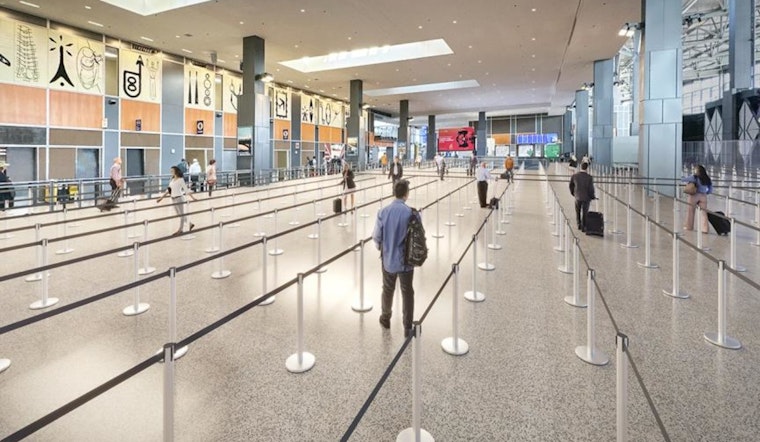
As Austin-Bergstrom International Airport (AUS) grapples with a surge in passenger traffic, efforts to streamline the flow of travelers are well underway. Central to this initiative is the Atrium Infill project, a 12,000-square-foot expansion designed to alleviate congestion at ticket counters and TSA checkpoints. Van Thompson, project manager of the "Journey With AUS" expansion program, underscored the airport's growth, noting that "AUS was originally designed for 11 million, and we’re at 21 million," according to a statement obtained by the City of Austin's official website.
With activity having skyrocketed over the last three years, the necessity of transitioning from a medium-sized to a large airport is palpable. Addressing the void above the baggage claim area, the Atrium Infill project will provide not just additional queuing space but also a new arrivals level ceiling, replete with improved lighting and modern sprinkler systems. "We are coordinating with the fire marshal and fire engineer," Thompson told the City of Austin's official website.
Moreover, the Atrium Infill includes enhancements to the airport's heating and cooling systems for improved climate control. Given AUS's age—clocking in at a quarter-century—such updates are essential. "Air handling units need to be replaced every 20-25 years," Thompson elaborated in the City of Austin's blog post. Collaboration has been a cornerstone of the project's methodology, with Thompson detailing on the city's website how the alignment of designers and contractors from the start helps to maintain cost control and ensure seamless coordination.
Amidst the construction, cultural heritage remains a focal point; the statue of Barbara Jordan, an icon of Texas and national politics, will be shielded from the public's eye by protective barriers that celebrate her legacy with museum-quality photography. Declared in an interview by Thompson, it is planned that these structures will be adorned with images of the Jordan sculpture and tell the story of her groundbreaking life. Meanwhile, popular local art pieces such as the five guitar sculptures will be temporarily relocated, ensuring that passengers can still experience a piece of Austin's cultural flavor while construction continues.
For sustainability aficionados, Thompson has engaged with groups to adopt best practices, including the use of low-carbon concrete and recycling materials from the demolition. Nighttime travelers should anticipate noise, as construction is slotted for the quieter hours between midnight and 8 a.m. "We need an 8-hour shift to be productive," Thompson shared with the City of Austin's website, also noting measures to keep noise levels in check. The completion of the Atrium Infill, slated for 2026, promises passengers more space and a smoother airport experience.



