

























































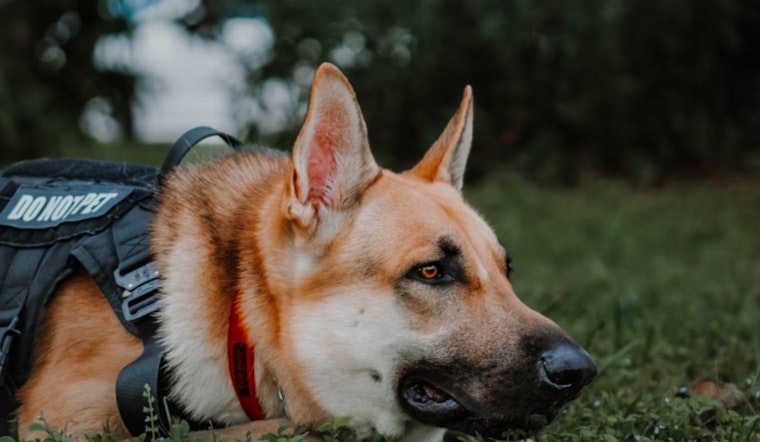
Researchers at Washington State University (WSU) are using trained dogs to help detect Little Cherry Disease (LCD), which affects the tree fruit industry. This two-year project, supported by the Washington Tree Fruit Research Commission and the Northwest Nursery Improvement Institute, aims to improve early detection of LCD, which is difficult to identify with current testing methods, such as polymerase chain reaction (PCR) tests.
As reported by the Washington State University, Scott Harper, associate professor at WSU's Department of Plant Pathology, explained that the dogs are highly effective in detecting low concentrations of the pathogen, something that PCR tests struggle with. Additionally, the dogs are faster than PCR testing, which can take a day to analyze a single tree.
LCD causes small, unripe, and unmarketable cherries, and symptoms only appear during harvest, making it hard for growers to identify the disease earlier. The disease spreads through grafting, infected materials, or insects like mealybugs and leafhoppers, forcing growers to replace infected trees, which is costly.
Jessica Kohntopp, a dog trainer from Idaho, trained two dogs, Humma and Aika, to detect infected plants. She used a gamified approach, rewarding the dogs with toys when they identified diseased plants. This method achieved a combined accuracy rate of 99.72% in a mini-study.
WSU researchers plan future studies to determine whether dogs can detect infected trees in nurseries and how tree dormancy affects detection. The goal is to make this method accessible to commercial growers. Corina Serban, WSU tree fruit extension educator, highlighted the ambition to scale the approach and prove the dogs' accuracy through science. The research is ongoing but has shown promising results.





