

























































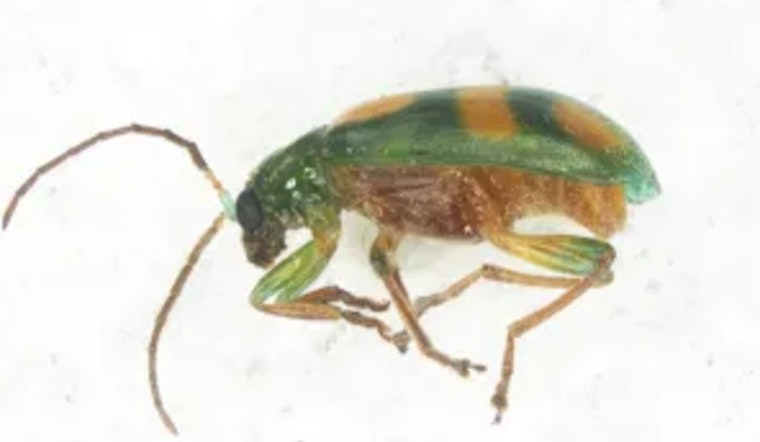
In an effort to protect U.S. agriculture, Customs and Border Protection agriculture specialists recently thwarted an insidious attempt by a foreign beetle to breach our borders. The interception occurred on March 13 at the Brownsville Port of Entry, where a shipment of palm foliage, earmarked for careful scrutiny, revealed the presence of a first-time-unwelcome guest – a live specimen of the Diabrotica sexmaculata, otherwise known as a type of corn rootworm, according to the U.S. Customs and Border Protection.
Hiding within the green folds, the pest was detected during an inspection at the Veterans International Bridge, as mentioned by the U.S. Customs and Border Protection news release. The vigilant agriculture specialists who discovered the insect immediately sent it for identification, revealing its status as an actionable pest. This marks the first time this particular pest was intercepted at the Brownsville Port of Entry, posing a previously unseen threat to American agriculture.
Local officials have been quick to underscore the significance of such interceptions. Port Director Tater Ortiz, representing the Brownsville Port of Entry, affirmed the importance of such measures. "The work performed by CBP agriculture specialists at our ports of entry plays an important part in safeguarding our American agriculture by preventing the dissemination of pests and animal and plant diseases," he stated in the U.S. Customs and Border Protection release. Ortiz's words reflect the ongoing vigilance required to maintain the health of the nation's agricultural landscape.
The beetle, known to be a resident of Guatemala and Mexico since first identified in 1879, is part of a genus that includes several species known for their destructive impact on crops. Faced with the potential risk, the U.S. Customs and Border Protection took decisive action, re-exporting the shipment of palm foliage back to its country of origin, Mexico, to avert an agriculture crisis.




