

























































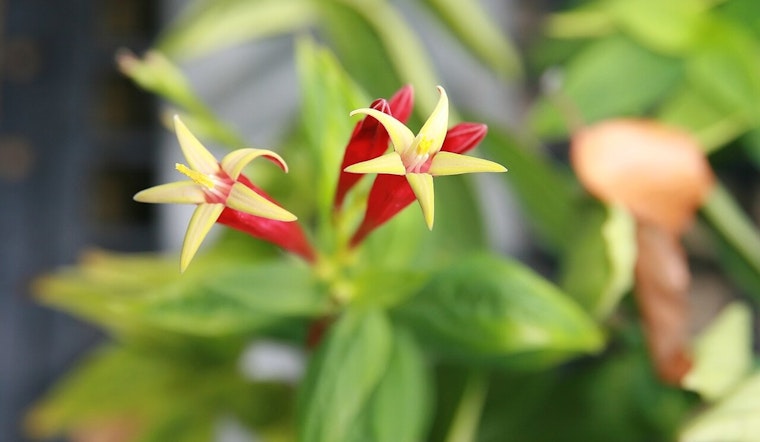
If you're a plant enthusiast or simply a home gardener looking to pimp out your green space with some resilient flora, you might want to take a closer look at Spigelia marilandica, more commonly known as the Woodland Pink or Indian Pinkroot. Despite its common name, this perennial is all show with bright red and yellow star-shaped flowers and none of the dainty pink hues you might expect. According to UTIA News, though it may be the victim of a botanical naming misfire, this native can adapt to a variety of settings - from your shaded patio corner to the sunnier edges of your garden.
The case of the Woodland Pink is a quirk in an otherwise practical system where plant names often signal something about their characteristics. Yet, Spigelia marilandica stands as a testament to the fact that names can sometimes be a bit off track. For instance, it's not just 'Little Redhead' or 'Ragin Cajun' that promises low-maintenance beauty; according to UT Gardens, the 'Apple Slices' and 'Orange Slices' varieties from Proven Winners are injecting new life into the plant market. It's clear that while Linnaeus might have taken a shortcut in the naming process, today's cultivators are doubling down on creativity.
You don't have to take my word for it; just swing by the UT Gardens, where Spigelia marilandica specimens are living their best life in both the Knoxville and Jackson locations. These botanical wonderlands showcase this native gem as part of their mission to "foster appreciation, education and stewardship of plants," as the botanical garden is an integral part of the University of Tennessee Institute of Agriculture. They're open to the public and are an ideal locale for witnessing these plants in action.
Gardening should be accessible and enjoyable, and the hardy Spigelia marilandica stands as a sterling example of a plant that is both. And let's not forget about the pollinators - hummingbirds and butterflies can't seem to resist the tubular flowers' allure, reinforcing the notion that even with a name that might scratch the head, this native knows how to attract quite the crowd. With minimum care, a mid-season trim could see intermittent reblooming until frost bids the garden adieu. So, in an era where low effort and high reward is the mantra, this perennial fits the bill, irrespective of its nomenclature snafu.





