

























































An independent report carried out by the International Association of Assessing Officers (IAAO) has clarified the air around the City of Detroit's property assessment standards, signaling compliance with state law and refuting allegations of systemic overassessment in residential property appraisals. Detroit Chief Assessor Alvin Horhn welcomed the findings, which align with the city's stance against recurring accusations of inflated home valuations, according to the City of Detroit.
"The study shows Detroit residential property assessments at the level (50% of market value) required by State law, a fact which has been annually confirmed by the Wayne County Equalization Department. This puts the issue to rest once and for all," Horhn commented on the report's conclusion that put a 95% confidence level ranging between 49.7 and 50.5 in assessments, as revealed in the International Association of Assessing Officers report obtained by the City of Detroit. Concerns had been raised in the past over whether the lowest-end properties in Detroit were being overvalued, prompting the city council to mandate an unbiased analysis.
The report did, however, recognize the limitations of the current sales verification process. It recommended an expansive review of all market transactions to refine value estimates, a change that would necessitate multi-governmental cooperation. In a statement obtained by the City of Detroit, Horhn responded that Detroit leverages every legal avenue to ensure precise valuations, accounting for diverse types of sales and the particular economic circumstances of the city's neighborhoods.
The contention surrounding property valuations had seen the Coalition for Property Tax Justice challenge hundreds of assessments, alleging inflation in valuations and consequent overtaxation. However, outcomes reported by the Board of Review, which operates independently of the Assessor’s office, have overwhelmingly upheld the city's valuations. For instance, in 2024, out of 544 appeals filed to the Board, only 130 were approved for value changes, while a mere 11 had their taxable value reduced, implicating a 2% alteration rate. The next year showed slightly more adjustments, with 81 out of 251 appeals receiving value changes and 10 seeing a reduction in taxable value, marking an adjustment rate of approximately 4%, as stated by the City of Detroit.
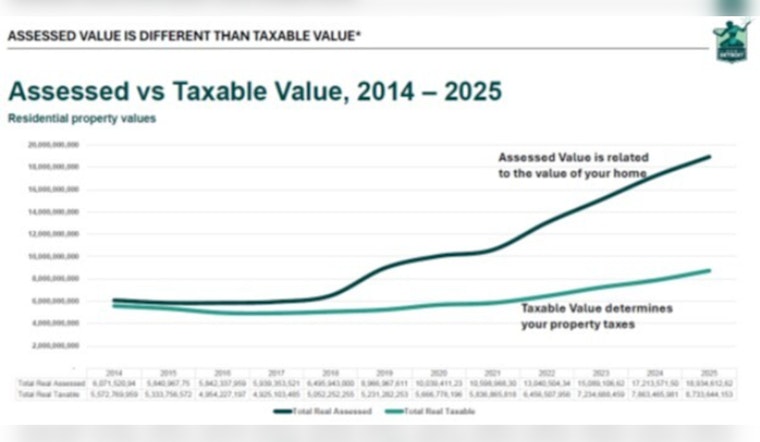
Further, property taxes in the state of Michigan are derived from taxable value, not assessed value—a distinction that has shielded many longstanding Detroit homeowners from steep tax hikes. Due to legislation enacted in 1994, increases in tax value are capped, typically unable to exceed either the rate of inflation or 5%, whichever is less. This safeguard has contributed to an environment where, for example, while 2024 saw a spike in home values by 19%, the tax rise was contained to 3.1% for those who didn't purchase property that very year, as per the City of Detroit.





