

























































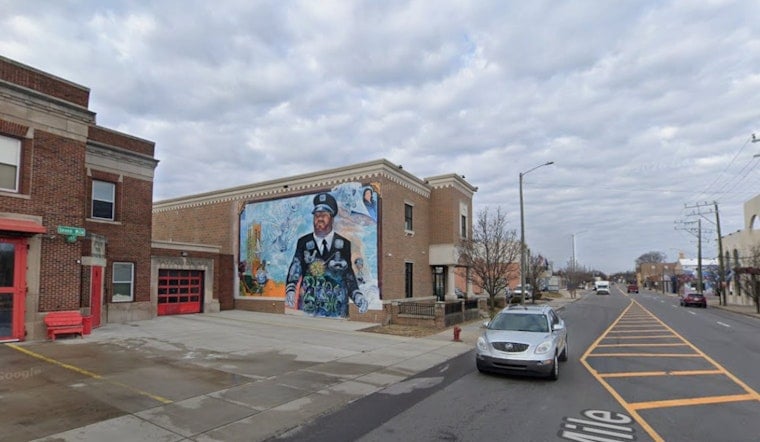
A fading mural on Detroit's east side has been given new life, repainted to honor Starkisha Thompson, a woman shot 12 times in her own driveway in October 2018 after testifying against the man accused of carjacking her. The restored artwork sits near the intersection of 7 Mile and John R, in the same neighborhood where Thompson's family still lives.
The mural had started to fade before Detroit artist Palmer Smith stepped in to recreate it after Thompson's family reached out to him, according to WXYZ Channel 7. Smith, a Davis Aerospace High School graduate who has created artwork for Detroit's mayor and musical artists, said his main goal was to showcase Thompson's face and who she was. He has returned to painting in recent years, and the community rallied around the restored tribute once it was finished.
A Killing Rooted in Courtroom Testimony
Thompson's murder traced back to an ordinary crime: a carjacking at a BP gas station in Harper Woods on September 7, 2018, after which police recovered her stolen Dodge Charger by tracking her stolen iPhone via GPS, according to the Michigan Court of Appeals. Kenneth Dixon was apprehended while unloading items from the vehicle, and Thompson later testified against him at his October 3 preliminary hearing. Six days after that testimony, at 8:05 a.m. on October 9, 2018, she was shot outside her home at Cordell Street and Collingham Drive, as detailed by ClickOnDetroit.
Prosecutors say Corey Holmes fired the shots that killed Thompson in her driveway, and that Dixon, held in Wayne County Jail at the time, gave Holmes her address using recorded phone calls with his girlfriend to coordinate the attack. As police secured the scene that morning, Thompson's father collapsed without a pulse, and Detroit police officers performed CPR to revive him, per the same ClickOnDetroit account.
Convictions Followed a Multi-Year Investigation
Investigators built their case against Holmes using video footage from a neighbor's security camera and DNA evidence recovered from a garbage can near Thompson's driveway, since Holmes wore a mask during the attack to conceal his identity, according to the Michigan Court of Appeals. Dixon, the carjacking defendant who orchestrated the plot from behind bars, was convicted of first-degree murder and sentenced to life without parole on November 10, 2022. A third co-conspirator, Jah-Lana Streeter, who helped facilitate communication between Dixon and Holmes, entered a plea agreement to testify against both men and was convicted of second-degree murder, receiving an 11-to-25-year sentence.
Holmes himself was sentenced in July 2023 to life in prison without parole for first-degree murder and conspiracy, plus a consecutive 6-to-10-year term for witness retaliation, following his conviction by a Wayne County jury that June. After the sentencing, Wayne County Prosecutor Kym Worthy publicly called Thompson's killing “a prosecutor's worst nightmare,” underscoring how retaliatory witness murders undermine public participation in criminal trials.
A Case That Changed Michigan Law
Thompson's death exposed a dangerous gap in how Michigan courts handled sensitive information: violent defendants could access victim and witness addresses through routine discovery filings. In October 2023, the Michigan House of Representatives passed House Bills 4738 and 4739, known as the Starkisha Thompson Bills, requiring prosecutors to redact personal identifying details, including home addresses and phone numbers, from materials handed to criminal defense teams.
For Thompson's family, the mural remains a more personal kind of memorial. A relative named Kurteiz said seeing Starkisha's face and smile in the artwork makes the family feel she is still with them. The restoration also fits into Detroit's broader public art landscape, where initiatives like City Walls have converted vacant or blighted walls into more than 200 murals across the city, transforming neglected structures into visual monuments for the people they honor.





