

























































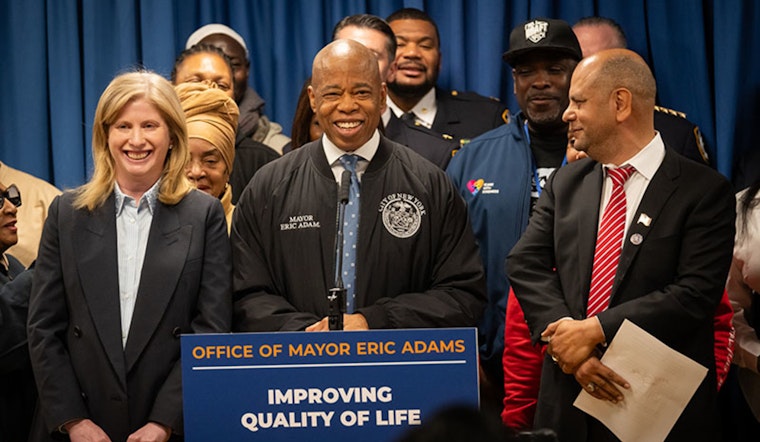
In a move to tackle non-emergency issues affecting New Yorkers daily, Mayor Eric Adams and NYPD Commissioner Jessica S. Tisch have launched the NYPD's Quality of Life Division, a unit that aims to strengthen community relations while addressing common disturbances such as noise complaints, illegal parking, and homelessness-related concerns. Uniting various officers including neighborhood coordination and traffic safety officers, the division responds to the steady rise in 311 service requests seen across the five boroughs over the past six years, addressing the kind of problems that significantly impact residents' sense of safety and well-being, as per the Mayor's office.
The Mayor and NYPD Commissioner have announced the launch of the Quality of Life Division, which will be rolled out in phases, beginning with a pilot program in select precincts and one Housing Police Service Area. The initiative aims to proactively address everyday disturbances and prevent their escalation. This approach marks a strategic shift toward tackling quality of life crimes that often evade broader policy measures.
At the helm of this nascent division is Deputy Chief William Glynn, an NYPD veteran with a notable 21-year career who has previously taken charge of initiatives such as restoring order to the Roosevelt Avenue corridor in Queens North. According to a statement obtained by the Office of the Mayor, Glynn's new role encompasses managing analytics, administrative support, and coordinating with borough-specific Quality of Life Teams, or Q-Teams, who will be led by sergeants reporting to their respective command's lieutenants and precinct commanding officers.
Mayor Adams underscored the city's stance with firm resolve, stating, "Issues like illegal vending, substance use, abandoned vehicles, illegal mopeds, reckless driving, and more have persisted for far too long. We will not rest until we have addressed the issues that affect the lives of everyday New Yorkers, and we will continue to make every borough, every neighborhood, and every block safer across our city. Together, we will protect public safety and make New York City the best place to raise a family.” Commissioner Tisch emphasized the importance of public trust metrics that go beyond traditional crime statistics—those aspects that can't be easily quantified. The goal of the Quality of Life Division is clear: to address the subtle yet critical factors that connect a community's sense of security to the everyday experiences of urban life, as noted by the Mayor's Office.
Furthermore, the Division's strategy echoes the successful CompStat model through its Q-Stat system, a tool designed for the meticulous examination of 311 service request data that will help prioritize non-enforcement solutions, allowing for monthly meetings to identify neighborhoods most affected by persistent quality-of-life issues. Local leaders and Q-Team officers will receive additional training on dealing with the unique challenges presented by the divergent nature of quality-of-life disturbances, from handling derelict vehicles to utilizing sound metering devices for noise complaints. The initiative arrives at no extra cost to taxpayers, as it is structured within the existing framework and budget of the NYPD, aiming to enhance operational efficiency and align more accurately with community necessities.
State Senator Roxanne J. Persaud remarked on the significance of trust, seeing the program as a step towards proactive enforcement and better public safety, while Assemblymember Nikki Lucas commended the initiative for prioritizing quality-of-life issues, highlighting the potential to mend frayed trust in neighborhoods where the NYPD's rapport has suffered. Brooklyn District Attorney Eric Gonzalez lauded the strategy's potential to fortify public trust, and Manhattan District Attorney Alvin Bragg, Jr. echoed the sentiment on community well-being being paramount to overall safety. Councilmembers have also lent their voices, with Keith Powers emphasizing the right of all New Yorkers to feel secure and Justin Brannan elevating the discussion to the local level, addressing the needs of his constituents in Coney Island, as the program promises a responsive and attentive police force attuned to the daily needs of the city's diverse communities.





