

























































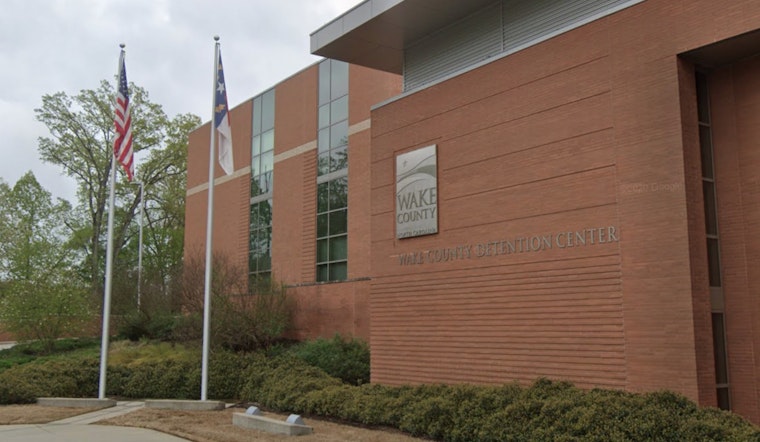
The North Carolina Department of Health and Human Services (NCDHHS) is working closely with the Wake County Sheriff’s Office to bring mental health services directly to the Wake County Detention Center. Specifically targeting those defendants who are deemed Incapable to Proceed (ITP) to trial due to mental illness, the initiative aims to restore their competency within the detention center’s walls, expediting both their treatment and their journey through the judicial system, as reported by NCDHHS press release.
By applying lessons learned from the NC RISE program, which has shown promising results in Mecklenburg and Pitt Counties, NCDHHS seeks to alleviate the burden on state psychiatric hospitals by offering an alternative setting for capacity restoration. Made to individuals directly inside the detention center, the treatments consist of psychiatric care and counseling. The expansion to Wake County reflects a concerted effort to create a more efficient and humane approach to defendants with mental health issues. "By making capacity restoration services available in detention centers and communities, we are able to get people the care they need faster and moving through the judicial process more quickly," NCDHHS Secretary Dev Sangvai told the press release.
Traditional routes to capacity restoration in North Carolina were previously limited to state hospitals, which could not accommodate the quick access necessary for many ITP individuals. That landscape began to shift with the introduction of NC RISE and the increased focus on community and detention center-based services. This change has not only improved access but has also allowed for state psychiatric hospital beds to remain available for those in need of more intensive treatment. "This program provides our agency and community with a valuable tool to support individuals while also helping move cases through the court system more efficiently," Wake County Sheriff Willie Rowe elucidated in the statement obtained by the NCDHHS.
Early results from NC RISE are encouraging, indicating a 60% reduction in referrals to Broughton Hospital for ITP individuals, as well as an 82% success rate in restoring defendants' capacity to proceed in legal matters. This streamlined process contrasts sharply with the prior average of 140 days to restore capacity in a state psychiatric hospital setting, compared to approximately 50 days within the detention-based program. Dr. Robert Cochrane, NCDHHS Director of Forensic Services for the Division of State Operated Healthcare Facilities, highlighted the impact, mentioning, "Results from NC RISE have been overwhelmingly positive and show we are meeting our goals to expand access to treatment options and decrease the strain on state psychiatric hospitals." Recovery Solutions, the entity implemented the Mecklenburg County pilot, will extend its services to oversee the new NC RISE program at the Wake County Detention Center.
The NC RISE initiative is part of a larger $835 million effort to improve mental health and support for families and children in North Carolina. Of that amount, $99 million is set aside to improve mental health care for people involved in the justice system, with the goal of strengthening both legal and health services across the state. As NCDHHS adds more services, the focus stays on helping North Carolinians with complex needs, especially those connected to the justice system.





