

























































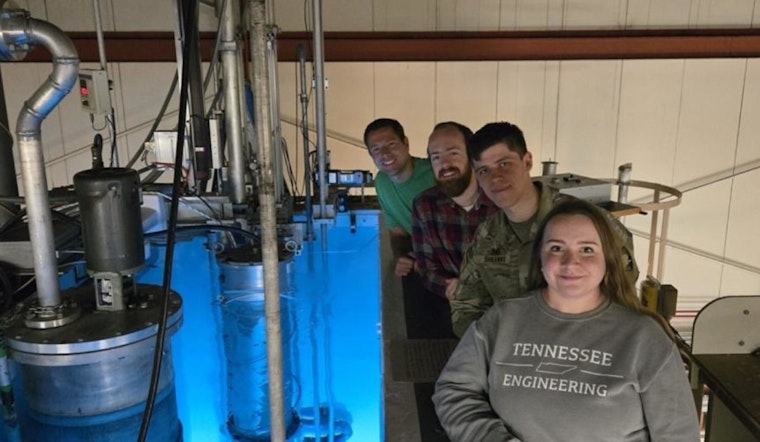
In a significant stride toward potential missions to Mars, a team from the Oak Ridge National Laboratory (ORNL) has made advancements in nuclear thermal rocket technology. The collaboration, which includes university students, utilized a specialized reactor at The Ohio State University to test new fuel coating methods, greatly anticipated to enhance the proficiency and speed of NASA's crewed spacecraft. As reported by ORNL, the experiment set out to verify whether the novel fuel coatings could resist the harsh conditions of space travel.
Brandon Wilson, an R&D member at ORNL, emphasized the experiment's objective, stating to ORNL, "Testing materials at exceptionally high temperatures is a first and a crucial step toward helping NASA mature and qualify nuclear fuels for manned space exploration using nuclear thermal propulsion technology." The new tech uses a nuclear reactor to quickly heat hydrogen before ejecting it to generate thrust, far surpassing the capabilities of traditional chemical rocket engines. A successful implementation of this technology could serve to not only cut down the long transit time to Mars but also lessen the considerable mission costs, as well as the adverse impact on astronauts caused by radiation and prolonged weightlessness.
Testing such materials presents an exceptional challenge, as they must be durable enough to handle conditions far beyond those found on Earth. ORNL has been at the forefront with its zirconium carbide coating technique, which could shield fuel and reactor core components from hydrogen damage and corrosion while not hindering reactor performance. Key to these tests is INSET, or In-Pile Steady-State Extreme Temperature Testbed, created by ORNL's Nuclear and Extreme Environment Measurement group to aggressively heat materials to 2200 degrees Celsius within five minutes inside a nuclear reactor while allowing rapid cooling post-irradiation. Developed with significant input from University of Tennessee graduate student Emily Hutchins, INSET 2.0 presents a cost-effective and adaptable tool for material tests both in and out of reactor environments.
The recent test involved four nuclear thermal rocket fuel surrogates painted in zirconium carbide that were put through repeated harsh temperature cycles for two days. The trial was conducted by the ORNL team, which included not only professionals like Wilson and post-doc associate Bryan Conry but also students Emily Hutchins from the University of Tennessee and cadet Pavel Shilenko from West Point. "I am exceptionally proud of Emily and Pavel," Wilson told ORNL, praising the hands-on role the students played in the groundbreaking research project.
Following the irradiation tests at the Ohio State University Research Reactor, a post-irradiation analysis scheduled for later this spring at ORNL will assess the effectiveness of the coatings and their protective qualities under simulated operational circumstances. The results of this experiment are crucial for moving forward with nuclear thermal propulsion, which could transform future human space exploration. This work has received backing from NASA and the Nuclear Science User Facilities' Super Rapid Turnaround Experiment program. ORNL recognizes the support of the university's reactor staff and credits UT-Battelle for its management on behalf of the Department of Energy’s Office of Science, which remains a significant proponent for basic physical science research in the United States.





