

























































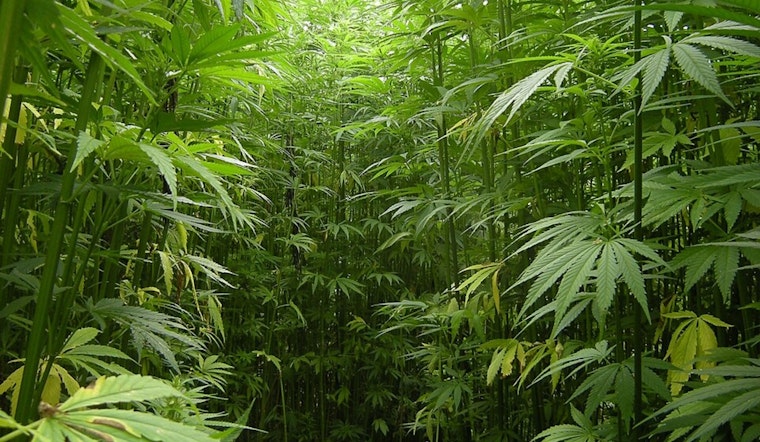
Texas hemp farmers are standing at a critical juncture as legislative measures threaten to curtail their burgeoning industry. Senate Bill 3 potentially signals a harsh clampdown on any consumable hemp products with detectable levels of THC, resonating fears among growers of a collapse in their sector. Veteran hemp farmer Andrew Hill articulated the risks, highlighting that items such as hemp hearts and seed oils, bereft of the intoxicating cannabinoids, would nonetheless fall under the ban. "Now, considering things like hemp hearts, hemp seed oils, salad dressings, and those health products that don’t have any cannabinoids in them to get you high, [they] will still be illegal under this law," Hill told KXAN.
Adding complexity to the situation, Texas lawmakers have already allowed the commercialization of hemp products with up to 0.3% of non-intoxicating delta-9 THC, post the federal legalization. Hemp items, ranging from gummies to beverages, proliferated across dispensaries and stores statewide. According to The Texas Tribune, Senator Charles Perry, who shepherded the original legalization, now sees such products as exploiting a loophole and endangering children. Perry's SB 3 seeks to remedy this with penalties for violators and restrictions, including child-resistant packaging, in a movement backed by Lt. Governor Dan Patrick, who’s been quoted as saying, "Kids are getting poisoned today."
Meanwhile, the economic repercussions loom large over the Lone Star State. KXAN has observed that the projected financial impact of SB 3's implementation could result in a significant revenue loss. The bill could culminate in a decline of $19.3 million from general revenue-related funds, impacting not only state finances but also counties and transit authorities, with cities anticipating a yearly loss of $2.1 million by 2030. Counterproposals such as House Bill 28 advocate for a different approach, focusing on regulation rather than outright bans.
For farmers like Kyle Bingham, the prospect of planting season brings hesitation rather than hope under the shadow of SB 3. Under this bill, unregistered hemp products could change from a potential profit to a misdemeanor or even a third-degree felony offense. "We’re looking at an industry that, we hope, is recovering and could provide value to the state, both from an economic impact and also creating jobs. We’d like to see all that hard work pay off, but we’re in a position where I’m not risking a felony for it. I’ll walk away before risking a felony," Bingham told The Texas Tribune.
The root of the debate sifts down to a fundamental misunderstanding of hemp's chemistry, according to those who nurture it from seed to harvest. Hill and others maintain that trace amounts of THC are naturally occurring in hemp and cannot be eradicated without destroying the crop's integrity. The argument put forth is for a nuanced regulatory system, much like the one governing vapes, which were recently subjected to stringent rules surrounding sale and packaging. The overarching sentiment from farmers suggests that a balanced approach to regulation could safeguard Texas's investment in an industry that, until now, promised growth and stability among small businesses, consumers, and the state's economic profile.





