

























































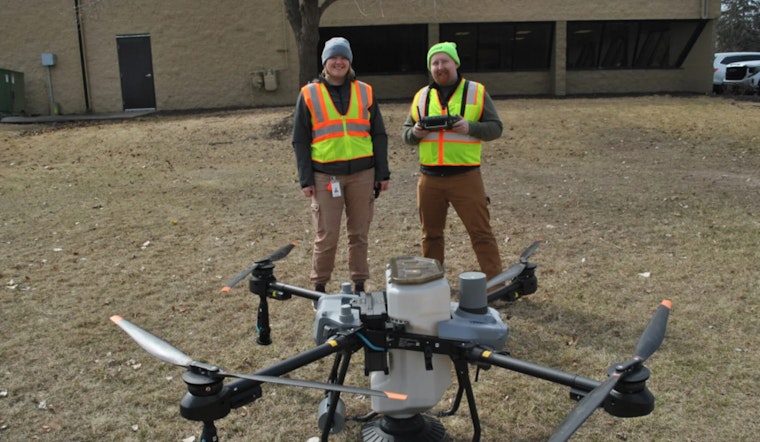
As we embrace the coming of warmer days in the Twin Cities, the Metropolitan Mosquito Control District (MMCD) gears up to combat the annual nuisance of mosquitoes. This year, the MMCD announced an addition to their pest control arsenal: a fleet of drones. According to a social media post from the MMCD, they have begun deploying these drones to treat standing water in every county of the District, targeting mosquito larvae before they can mature.
For the first time in 2025, all seven counties within the Metropolitan area will see these drones, an effort to streamline and enhance the efficiency of treatments. As mentioned on the MMCD's Facebook page, in addition to the new drone technology, the traditional methods involving trucks and helicopters will continue. Residents may notice, and see before they can be heard, the MMCD trucks or the buzz of helicopters as they go about distributing larvicide.
Alongside these aerial and ground efforts, the MMCD stays committed to environmental sensitivity. Field staff meticulously monitor and treat wetlands, with routine wetland and catch basin surveillance for mosquito larvae. Furthermore, the MMCD assures that their control materials pose no harm to humans, pets, or wildlife by employing regular safety tests. The active ingredients within the treatments are designed to target mosquitoes specifically, ensuring minimal impact on other insects.
Residents curious about the goings-on may observe MMCD staff adorned in "Mosquito Control" vests, as they transit properties to access breeding grounds. Should there be concerns, the MMCD suggests reaching out to their desk for inquiries. According to a Facebook post by the City of Coon Rapids, MN - Local Government, treatment schedules and helicopter activities are updated daily for public viewing on the MMCD website.
The MMCD's diligent work aligns with dual objectives: ensuring public comfort by reducing the mosquito population and defending against mosquito-borne diseases. For those interested in learning how they can decrease mosquito prevalence around their own homes, the MMCD encourages a visit to their Resident's Guide available on their website.





