

























































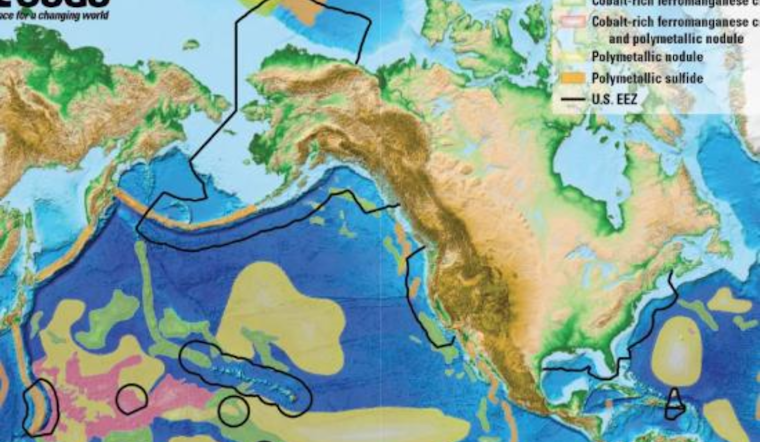
The ocean floor may be the next frontier for sourcing critical minerals essential to the nation's economy and security. As highlighted by the Department of the Interior's recent release of a factsheet created by the U.S. Geological Survey. Secretary of the Interior Doug Burgum emphasized the importance of this research, saying, "This survey of seafloor minerals represents a critical step in advancing the Trump administration’s commitment to unlocking America’s vast natural resources."
Prospective locations for these minerals, such as nickel, cobalt, manganese – utilized in various applications from stainless steel to batteries – as well as rare earth elements are scattered across the sea's abyss safeguarding a treasure trove of resources that could bolster critical industry and innovation while striving for what Burgum calls "American Energy Independence." According to the Department of the Interior's recent release, Acting Director of the USGS Sarah Ryker pointed out that "USGS science is extending our understanding of where critical minerals may be found, such as mineral formations in the Escanaba Trough, deep under the Pacific."
The importance of these findings does not rest solely in the mineral wealth itself, but in the potential they hold for the country to remain competitive internationally. The published factsheet facilitates the visualization of regions that are geologically and oceanographically favorable for the occurrence of these minerals. However, a need remains for more comprehensive data through dedicated sampling and mapping to validate commercial viability in these mapped areas.
Since the inception of the focus on mineral resource exploration under President Trump's administration in 2018, approximately 30% of land-based resources have been mapped, with parallel efforts underway for seabed resources. This initiative aligns with the USGS's history of scientific inquiry into deep-sea mining, dating back to 1962. It involves key collaborations with the Bureau of Ocean Energy Management and the National Oceanic and Atmospheric Administration, both of which regulate these ocean areas.




