

























































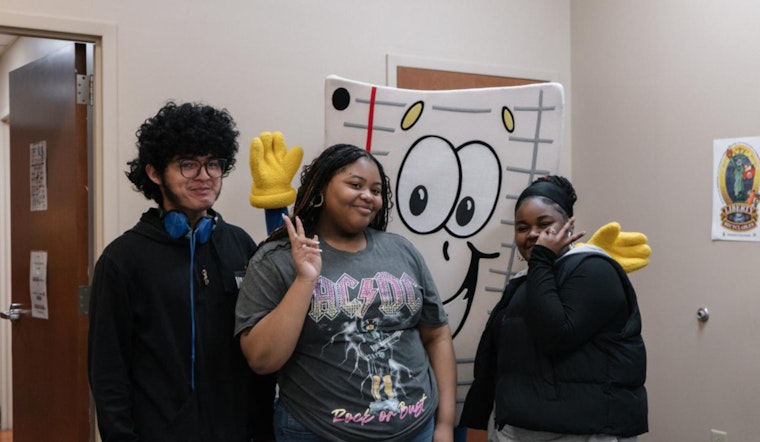
In Wake County, a milestone has been proudly marked with the 20th anniversary celebration of the Feed the Bin program—a school recycling initiative sponsored by Wake County Solid Waste Management. This initiative has, since its onset in 2004, involved student teams diligently navigating the halls of their educational institutions to gather paper, plastic bottles, and metal cans for recycling. According to a release from Wake County, the collection efforts of these student teams culminate each week when the sorted recyclables are transported to Sonoco Recycling for further sorting.
Enthusiasm for environmental stewardship has not gone unnoticed as Wake County Commissioner Cheryl Stallings expressed, "We are very proud of the participation we’ve seen from students across Wake County in the Feed the Bin Program." She continued to articulate the community's sentiment by stating, "It’s amazing that over the past two decades so many young people have taken the initiative to ensure we’re diverting as much waste as we can from the landfill." Her words, shared via a statement to Wake County's website, go on to imbue a sense of hope for the continuation of such environmental initiatives by future generations.
Over the last year, several events have been organized to celebrate the program's impact and further educate students. This included the School Media Day—an event hosted in partnership with Sonoco Recycling where students got the chance to visit the recycling facility, learn more about the process, and even interact with 'Paper Guy,' the program's own mascot. Moreover, an online survey titled "Show Us How You Feed the Bin" was conducted to add insight into the function of the program on a school-by-school basis. The data, as well as permission to spotlight recycling programs, was collected in the hopes to shine a virtual light on schools via the Wake County Waste and Recycling Facebook page.
A composition study, which Sonoco Recycling conducted in May 2024, was pivotal in underlining the recycling habits within the participating schools. This detailed assessment, according to Wake County news, sorted collected materials into ten categories, which were then weighed and analyzed. The predominant finding was that paper topped the list of recycled materials at an astonishing 87% of the collected weight, followed by PETE plastic bottles and steel cans. The study goes on to reveal that the contamination rate of these collections was a mere 1.5%, a figure strikingly lower than the county's average, underscoring the students' keen understanding of recycling protocols.





