

























































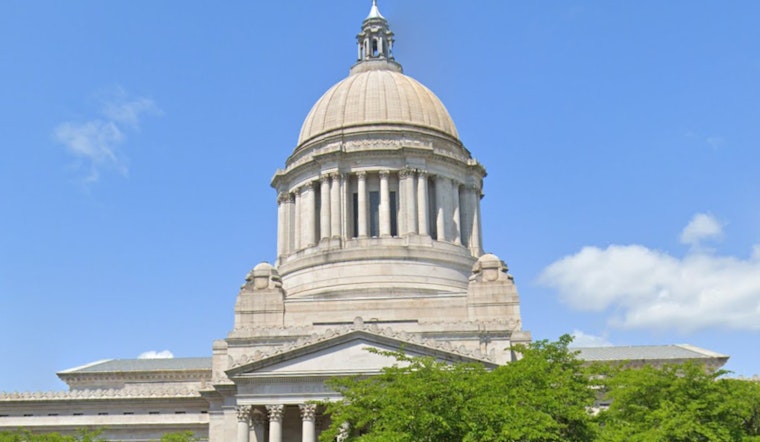
In a move that underscores the state's commitment to education and essential services amid fiscal challenges, the Legislature has approved a $77.1 billion operating budget. Announced last Sunday, the budget takes a dual approach of cutting expenditures and introducing new revenue sources to bridge the state’s fiscal gap. According to details shared by House Democrats, the strategy includes $3.1 billion in reductions for the 2025-27 biennium within a larger framework of $7 billion in cuts over four years. Conversely, new revenue measures are expected to bring $8.7 billion to the coffers.
"This was a year that demanded hard, often painful choices," expressed Senate Ways & Means Chair June Robinson in a statement that speaks to the gravity of fiscal decisions. "Every decision was made with care, focused on protecting essential services, supporting our schools, and investing where the need is greatest," as reported by House Democrats. The unprecedented financial juggling act aims to meet the requirements of an ever-evolving economic landscape, supporting Washingtonians across various sectors. To this end, the budget significantly bolsters funding for K-12 education, allocating over four years $750 million for special education, $213 million for essential learning materials and supplies, and $200 million to aid low-income school districts.
Maintaining the availability of core services was a highlighted priority. Allocations in the new budget reflect a commitment to social safety nets, such as $93 million for emergency food assistance, $117 million earmarked for local housing programs, $20 million set aside to enhance resources for crime victims, and $25 million intended to bolster support within refugee and immigrant communities. State employees, including non-union workers, will see funding and approval of collective bargaining agreements, with no furloughs or healthcare premium changes.
Revenue-generating measures are central to the Legislature's fiscal plan. They include a novel excise tax on banking profits and surplus zero-emission vehicle credit sales (HB 2077), reforms to school levies (HB 2049), adjustments in the Business & Occupation (B&O) tax rates (HB 2081), and closure of outdated tax exemptions (SB 5794). Additions to the progressive taxation approach on capital gains and estate reform (SB 5813), along with a modernized sales tax protocol (SB 5814), round out the Legislature's portfolio for raising funds. "We were able to do all this by taking a balanced approach," House Appropriations Chair Timm Ormsby told House Democrats, appreciative of the efforts to eschew an all-cuts strategy that might have been detrimental to Washington's most vulnerable.
While policy investments amount to about $500 million each year, a stark decrease from the $2.4 billion annually added in the 2023-25 budget, the Legislature also ensures a healthy reserve. By the close of the 2025-27 biennium, the state anticipates preserving $2.3 billion in total reserves, with an expected increase to $3.6 billion by the end of 2027-29. With the governor's signature, the operating budget's provisions will take effect immediately as the state navigates the task of allocating resources with precision and forethought.





