

























































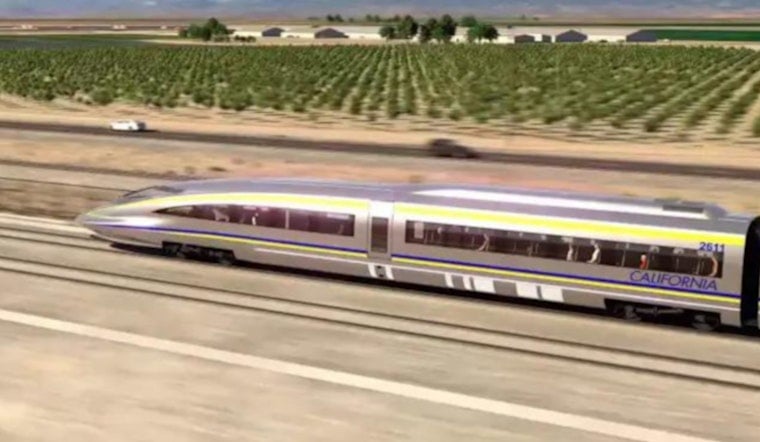
In the race to redefine transportation through high-speed rail, California is currently blazing a path miles ahead of Texas. According to a recent report from the Governor's office, California's high-speed rail project is moving from blueprint to reality with construction well underway, while the Texas counterpart is still waiting at the station to begin the first phase of development.
As of the current status reports, California's high-speed rail stretches across 494 miles, connecting San Francisco to Los Angeles through the Central Valley, with 119 miles under construction and another 52 major structures already standing. Despite facing federal obstacles in the past, the project has continued moving forward, with environmental clearance secured for nearly the entire route. Meanwhile, the Texas Central high-speed rail, with an envisioned stretch of 240 miles from Dallas to Houston, has yet to overturn the first clod of earth.
Financial backing also separates the two ventures substantially. California benefits from public funding, a mix of state and federal dollars, with doors open for private investment in the future. Texas Central had placed its bets on private investment after federal funding was withdrawn, which seems to have delayed its launch indefinitely. Projected job creation and economic output from California's initiative have been substantial, boasting over 15,000 jobs created and nearly $22 billion of economic output generated to date, a stark contrast to the silence on job creation and economic impact from the Texas project.
When it comes to environmental contributions, California's high-speed rail is estimated to reduce greenhouse gas emissions significantly, equivalent to removing up to 700,000 cars off the road annually. Additionally, the California project has been doing its part to tread lightly on the planet by diverting 95% of construction waste from landfills. The integration with existing transit systems also distinguishes California's approach, ensuring that future passengers can interconnect with several regional services, something Texas has not yet put on its platform.
The timeline for enjoying the benefits of these high-speed rails is another divergence point. California aims to roll out its early operating segment between 2030 to 2033, according to the Governor's office, setting a clear timeline for travelers looking forward to faster commutes. Texas, however, has not established any dates for public use, keeping commuters in the Lone Star State guessing when they might be able to trade in the slog of I-45 for something more rapid.




