

























































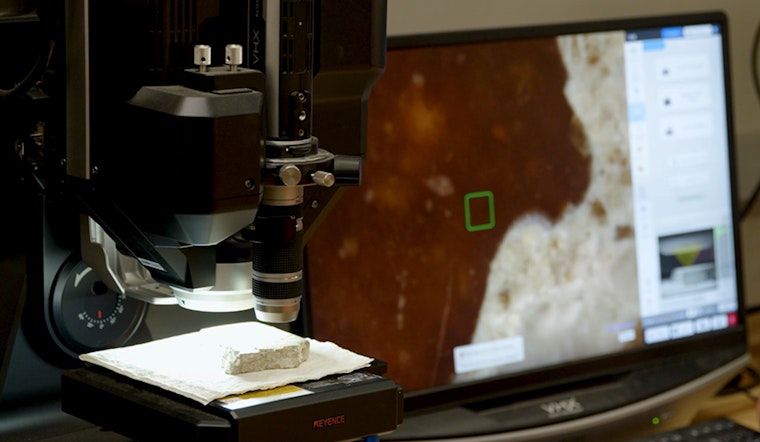
Under the seemingly unremarkable surface of Texas roads, a meticulous examination of strength and safety is underway, led by a team of experts at the Texas Department of Transportation’s Materials and Tests division lab. As per a recent feature by TxDOT, the division carries out petrographic analysis to scrutinize every aspect of the roads, from the cracks to the concrete mixes. Using a combination of microscopy, mineralogy, geology, and chemistry, the team performs forensic examinations to ensure that every inch of the roadway adheres to rigorous safety standards.
Technical project manager Maria Hruska, having vast expertise in the field, emphasized the importance of their work, detailing that their advanced technological tools afford them the ability to identify and analyze failures on a microscopic level. "They are extremely useful in doing very, very fine, detailed work and helping us see stuff that even normal microscopes wouldn't be able to see," Hruska told TxDOT. The equipment utilized, akin to that found in medical facilities, serves to uncover potential damages hidden from the naked eye, highlighting issues such as "concrete cancer," which begins with minuscule defects but can lead to extensive cracking if left unaddressed.
One particular case brought to the lab revealed that concrete failing strength tests contained excess air, reducing its strength by about 30%. Hruska mentioned at TxDOT, "We found out that actually air had been mixed into that concrete, so much that it weakened it by about 30%. And that concrete actually had to be removed." The dedication to identifying such critical weaknesses underscores TxDOT's commitment to preventing infrastructure failures before they pose risks to the public.
Beyond their routine use of sophisticated microscopes, TxDOT's team also employs Laser Induced Breakdown Spectroscopy (LIBS) scope. This space-age tech is shared with the Mars rover and functions by hitting a surface with a laser for elemental analysis. Hruska highlighted the scope's significance in her TxDOT interview, saying, "It's actually the technology that's used on the Mars rover. A laser will essentially hit the surface and do an elemental analysis."
Yet, TxDOT understands that technology is only part of the solution. Adapting their analyses to the diverse climatic conditions across Texas is also paramount. Maria Hruska reminds Texans that while the Department is invested in ensuring road safety, the responsibility ultimately lies with the motorists. "We put so much time and energy and effort into making sure these roadways as safe as possible, but at the end of the day, you still have to drive like a Texan: kind, courteous and safe," she affirmed to TxDOT.





