

























































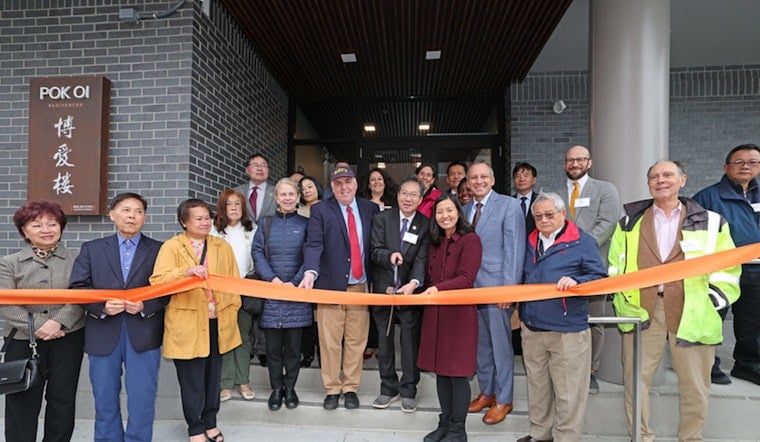
Boston's Mayor Michelle Wu was present alongside a host of local officials and community members in Chinatown to celebrate the unveiling of the Pok Oi Residences, an affordable housing development intended to keep the neighborhood within reach for its current and future residents. According to a statement from Wu obtained by Boston.gov, she remarked, "The opening of the Pok Oi Residences marks an important milestone in preserving affordability and community in this historic neighborhood." The housing complex, which is located at 288 Harrison Avenue, includes 85 apartments catering to a range of incomes pegged to the area's median income.
The development represents a collaboration between Beacon Communities LLC, the Chinese Consolidated Benevolent Association (CCBA) of New England, and various city and state agencies. Harrison Affordable, LLC joined forces with this tapestry of partners, which has managed to transform a once underused parking lot into a new residential haven. Having apartments reserved for people who have experienced homelessness, the development acknowledges the diverse needs of its populace. While situated at the gateway to Chinatown, the building also endeavors to minimizing the impact of noise from urban life, with special windows to reduce traffic sounds, as Boston.gov reported.
As part of the project, attention was given to the local air quality issues which have raised concern among Chinatown residents. The design incorporates features which, informed by research from Tufts University's CAFEH, aim to counter the urban environmental challenges presented by proximity to the Massachusetts Turnpike. "Building affordable housing is critical to preserving the character of Chinatown," said State Representative Aaron Michlewitz in an interview with Boston.gov. He continued by acknowledging Mayor Wu's dedication to the needs of the area in completing the Pok Oi project. Chinatown's continued accessibility, both cultural and physical, is a testament to efforts from multiple quarters.
The funding for the Pok Oi Residences came from an amalgamation of sources, including the City of Boston’s Neighborhood Housing Trust and Community Preservation Act, along with state and federal Low-Income Housing Tax Credits. This represents a strategic mix of city and state resources, having the purpose to pave the way for more inclusive housing options. The project's environmental concerns were also addressed, with the building being LEED Gold and Passive House certified thanks to its energy-efficient design. Offering a nod to the practicality, the location provides residents with easy access to public transport and local amenities. "These 85 new homes will help Chinatown remain accessible to the families and residents who have worked hard to preserve this important neighborhood," Chief of Housing Sheila Dillon told Boston.gov, underlining the community-minded aspect of the development.
In line with Mayor Wu's goals to make Boston a welcoming place for all, the Pok Oi Residences add to the 17,000 housing units developed during her first three years in office. Under her leadership, a substantial portion of these units have been income-restricted, marking a significant stride in affordable housing efforts within the city. With an additional 12,000 units in the works, the expansion of affordable housing seems poised to keep gathering momentum and breaking records in Boston.





