

























































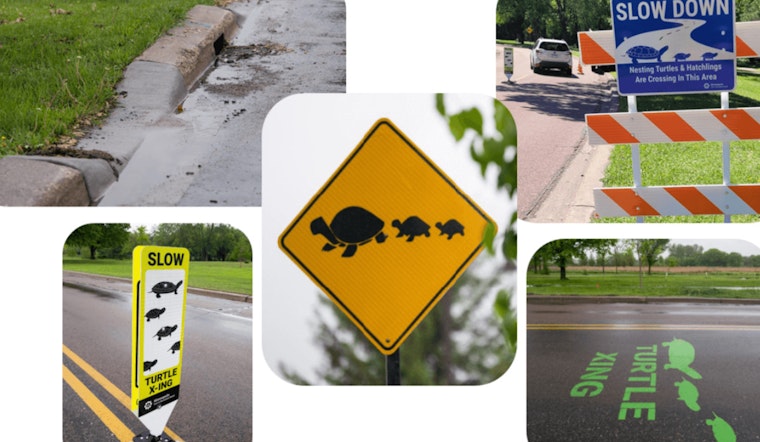
In an initiative that's part turtle goodwill, part traffic reformation, the Minneapolis Park and Recreation Board (MPRB) has gone full shell with a pilot program to protect our slow-moving friends during their most vulnerable treks across parkways and bike paths; it seems Minneapolis is taking turtle traffic seriously these days. According to a recent article by the MPRB, they’ve installed new signage and painted stencils along stretches of parkway that have been hotspots for turtle crossings, particularly by Minneapolis lakes and ponds, an effort aimed at keeping both the reptiles and commuting humans safe and aware.
Environmental Education Manager MaryLynn Pulscher was quoted explaining the rationale behind the initiative, "If more people are watching out for turtles in the road, fewer turtles will die from vehicle collisions,” and if the data is anything to go by, the concern is valid – in 2021, 10 percent of reported turtle sightings were of turtles that had met an untimely end, with the majority being spotted on roadways, MPRB introduced the pilot after a careful study of these sightings, other data tidbits, and unquestionably obvious concern for the well-being of Minneapolis' shelled pedestrians.
The vulnerable turtles, particularly snapping and painted varieties, are most at risk during spring and fall when they are on the move to find suitable nesting sites or are just breaking out as hatchlings, according to the MPRB article. Modifications along paths, including removing sections of curbs—yes, imagine a tiny hatchling the size of a US quarter trying to climb over a standard curb—were among the measures taken; also in play are green road stencils, slow down signage, and even center-line bollards designed to make drivers take pause, and perhaps enjoy the fact that they're helping to chauffeur turtles to safety.
But, the MPRB isn't just stopping with road markers and bollard installations, oh no, they're also rolling out a 10-point guide to encourage Minneapolis residents to become active participants in this ecological dance of turtle conservation; every driver and cyclist can help by keeping an eye out and slowing down, and the general public can report turtle sightings and help wayward turtles make it across the road when needed – all while refraining from turning them into unofficial pets or harassing them with overly curious canines.
As the MPRB continues to push forward with these changes, they encourage locals and visitors to report turtle sightings, with the park’s turtle tracking effort at bit.ly/ReportATurtle, and remind them to take injured turtles directly to the Wildlife Rehabilitation Center of Minnesota. Ultimately, through collaborative effort and mindfulness, Minneapolis hopes to see fewer shelled casualties on their roadways and a more harmonious coexistence between humans and turtles in their park spaces.





