

























































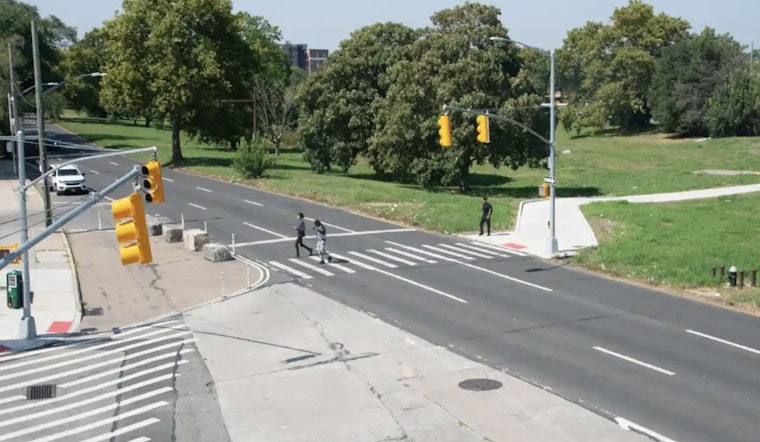
The New York City Department of Transportation (DOT) has launched a community-engaged study to overhaul the dangerous stretch of road known as the Conduit, which spans across Brooklyn and Queens. The corridor, which connects Atlantic Avenue in Brooklyn to the Belt Parkway and JFK Airport in Queens, has been a hotspot for traffic-related injuries and deaths. The DOT's study will aim to improve safety and ease of use for all, from drivers to cyclists and pedestrians.
Based on reports, the Conduit has seen over 40 serious injuries and five fatalities in the past five years, a statistic that has prompted this much-needed review. The current infrastructure, or the lack thereof, encourages highway-speed driving on what is technically a local street. According to a statement obtained by Gothamist, DOT Commissioner Ydanis Rodriguez emphasized the urgency of reimagining the Conduit as one that "improves daily life, not a roadway that puts pedestrians and drivers at risk."
Similarly, Queens Borough President Donovan Richards Jr. told AMNY, that the street has been a "disaster" in the city and that the community's safety needs have not been met.
Action begins with public engagement. Community workshops will collect inputs on the prospective redesign. Residents can attend an in-person session on June 10 at Robert H. Goddard JHS 202 in Ozone Park, or participate virtually via Zoom on June 12. With these workshops, the DOT is facilitating a platform for locals to voice their ideas and concerns integral to the corridor's redevelopment.
Efforts to mitigate the dangers of the Conduit have already seen reductions in speed limits and the installation of speed cameras, as well as the construction of some new sidewalks and crosswalks. According to AMNY, unpaved pathways along the corridor are yet another aspect begging for improvement. As a result, this community-led study marks an important step toward redesigning the thoroughfare into a safer route for residents across the boroughs.
Details on participation in the upcoming workshops are available on the NYC DOT website, where residents can also contribute their feedback through an online map.



