

























































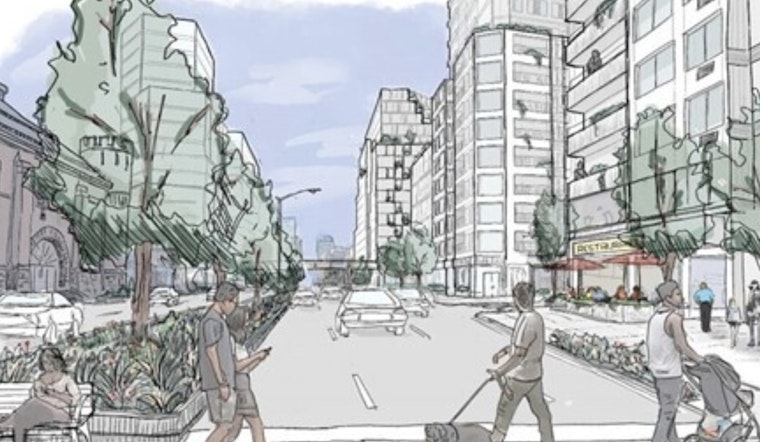
Following the recent approval by the New York City Council, Mayor Eric Adams is highlighting the progress of the Atlantic Avenue Mixed-Use Plan, which is set to transform the skyline and community landscape of Central Brooklyn. According to the New York City Mayor's Office, the development plan includes the construction of approximately 4,600 housing units—1,900 of which will be income-restricted—and is expected to generate around 2,800 long-term jobs in the area.
The plan extends beyond housing, incorporating a substantial investment of approximately $235 million from the Adams administration to improve open spaces, enhance traffic safety, protect tenant rights, and upgrade various neighborhood infrastructure and amenities. However, some critics have expressed concern about the potential for gentrification and displacement that may result from such a large-scale development initiative. Mayor Adams touted the project, saying, "The Atlantic Avenue Mixed-Use Plan marks a major milestone in our mission to build a more affordable, vibrant New York City, and today marks an excited victory for Central Brooklyn as we take the next steps towards building more housing and creating more jobs in the five boroughs," in a statement obtained by the Mayor's Office.
Designed to revitalize the Atlantic Avenue corridor—a 21-block area restricted by outdated zoning laws that have prohibited new housing since the 1960s—the project also plans to add 800,000 square feet of space dedicated to retail, commercial, and community uses, Deputy Mayor for Housing, Economic Development, and Workforce Adolfo Carrión, Jr. reflected on the decade-long community calls for change, remarking, "With thousands of new homes and jobs alongside hundreds of millions of dollars in infrastructure investments, the city’s partnership with the community will revitalize this critical corridor and bear fruit for decades to come," as told to the Mayor's Office.
In the wake of the plan's approval, the community reflects on the series of more than 20 meetings that shaped the project's trajectory including three public workshops, nine public working group meetings, and several steering committee gatherings and while these sessions spawned the Community Vision and Priorities Report last year, questions linger about how the impending changes will affect current residents and businesses throughout the development and beyond. The Adams administration emphasizes the scale of its housing efforts, citing a history of investment and an ongoing commitment to rezoning initiatives aimed at producing over 50,000 housing units over the next 15 years across multiple New York City districts. These efforts extend beyond Atlantic Avenue to include areas such as Midtown South in Manhattan, as well as Jamaica and Long Island City in Queens, reflecting a broader strategy to address the city’s housing needs while acknowledging the challenges associated with potential gentrification.
As the plan's multiple facets—the creation of safer, greener streets, improved public transit access, stormwater management upgrades, and ultimately more housing—begin to fall into position, community leaders and city officials alike are watching closely to see how these lofty goals translate from paper to the pavement; New York City Councilmember Ossé summed up the sentiment: "The best time to act was yesterday. The second-best time to act is now," expressing an urgency that resonates throughout all five boroughs in these conversations about development and sustainability, as reported by the Mayor's Office.





