

























































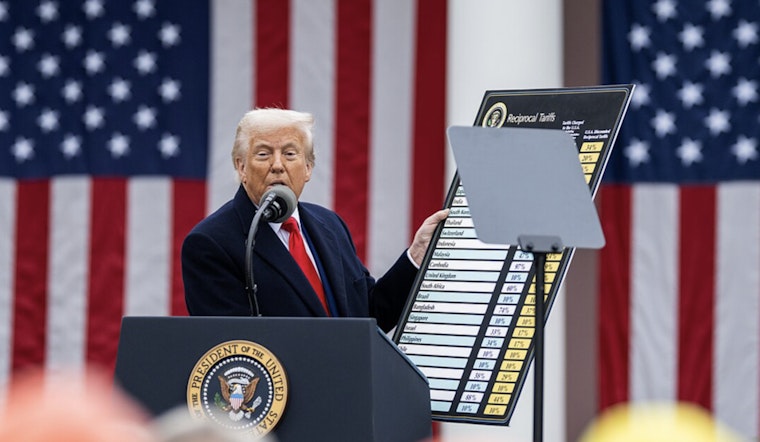
The ongoing trade dispute under President Donald Trump’s administration has placed economic strain on New York's Chinatown, with businesses like Phoenix Palace facing challenges due to increased tariffs. According to a CBS News report, tariffs reaching up to 145% on Chinese imports have significantly raised the cost of essential supplies, such as rice and spices—a 40-pound bag of rice that once cost $25 now sells for $61. The restaurant's owner, Cory Ng, noted the difficulty of absorbing these rising expenses without raising prices for customers and expressed hope that policymakers will consider how such tariffs affect small business owners working to stay afloat amid broader inflation.
Meanwhile, the founder of Afina, a company selling filtration shower heads, experimented with American manufacturing as an alternative to overseas production, in light of tariffs having leaped to 170%. Yet, despite giving consumers a choice between a costlier U.S.-made option and the original Asian-manufactured version, Ramon van Meer found no takers for the domestically produced product, said van Meer in an interview with Fox 5 New York, he further shared the result from the experiment, that highlighted a clear consumer preference for more affordable imports, despite a staggering 26,000 visits to the product's landing page, the American version remained unsold.
The implications of the Trump administration's tariff strategy extend beyond the burden on small businesses and consumers, as they also cast a spotlight on the viability of domestic manufacturing. Van Meer noted the U.S. manufacturing sector's lack of infrastructure and capacity to meet immediate demand, mentioning the significant investment required to facilitate a transition toward American production of goods. Moreover, there is an array of products for which domestic manufacturing is not feasible due to stringent environmental regulations, or because the necessary materials are not produced in the United States.
The tariff issue raises challenging questions about consumer responsibility and support for domestic products. As tariff discussions progress, both Van Meer and Ng represent the wider struggle businesses across industries are facing due to the trade war. Ng expressed confidence that Chinatown's long-standing resilience will help the community overcome these challenges, citing the neighborhood's history and the legacy of its predecessors as sources of strength.





