

























































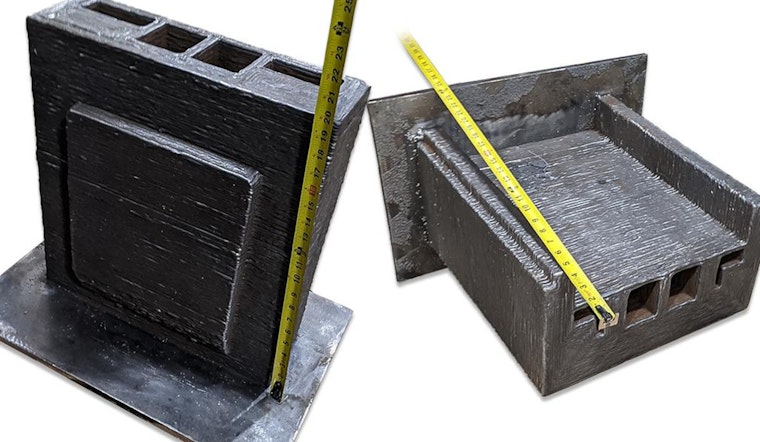
Researchers at Oak Ridge National Laboratory have made a significant leap forward in the realm of automotive manufacturing with their latest venture into 3D-printed metal molds. According to ORNL's recent announcement, these molds demonstrate a more efficient production method for large composite components used in mass-produced vehicles.
The traditional process of creating these tools often involves long supply chain delays, with the majority of an original steel block being wasted. This subtractive method contrasts sharply with the additive manufacturing technique favored by the research team at ORNL's Manufacturing Demonstration Facility, or MDF. In a statement obtained by ORNL, lead researcher Andrzej Nycz described the new approach as "smarter, faster ways to build essential tools," which could once again bolster the U.S. in its industrial competitiveness.
Additive manufacturing is particularly suited to complex metal molds because it builds shapes layer by layer, using ubiquitous welding wire as feedstock and reducing waste to about 10%. The transformative benefits of this technology have the potential to streamline how automotive components are made.
Notably, the ORNL researchers partnered with Collaborative Composites Solutions to use a specialized gas metal arc welding process for creating a mold with detailed internal features. This modern approach to mold-making creates forms that traditional machining would struggle to achieve, with an eye on advanced geometries such as internal heating channels. "The more complex the shape, the more valuable additive manufacturing becomes," Nycz said in an interview with ORNL.
The collaboration bore fruit when a battery enclosure mold was successfully printed, its structural performance subsequently validated to meet rigorous production tooling standards. The initiative, supported by the Department of Energy's Advanced Materials and Manufacturing Technologies Office, illustrates the department's commitment to advancing materials and manufacturing processes that can transform industries and tackle critical challenges.
Managed by UT-Battelle, ORNL operates as a nexus of scientific exploration. The lab’s efforts are part of the wider endeavors of the DOE's Office of Science, which undergirds a significant portion of physical science research in the country. Projects like the one headed by Nycz's team are vivid examples of AMMTO's vision for inspiring a manufacturing renaissance in the United States.





