

























































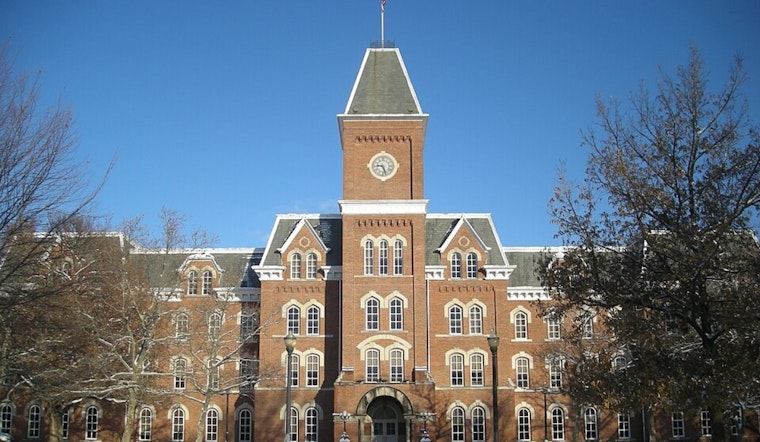
Ohio's appeal as a hub for Japanese businesses took center stage at a recent panel discussion hosted by The Ohio State University, as reported by OSU News. Industry insiders shared insights into why the Buckeye State has become a go-to destination for companies from the Land of the Rising Sun. As part of a series aimed at enhancing U.S. competitiveness in the global marketplace, the panel, which included academic and business experts, shed light on strategies Ohio could use to foster stronger ties with Japanese corporations.
Ohio State's Center for International Business Education and Research (CIBER) is an active player in this field, working to connect theory with practice. Dominic DiCamilo, senior director of the Office of Global Business for CIBER, discussed the center's role, saying via OSU News, "We collaborate across disciplines and industries to help companies and communities navigate the global marketplace more effectively." His statement underscores the significance of interdisciplinary approaches in the realm of business education and international commerce.
Reflecting on the state's success in attracting Japanese investment, Justin Kocher, JobsOhio's senior director of international business development, noted Ohio's significant employment figures resulting from Japanese companies. "It's in the order of 70,000 people in our state are employed by Japanese companies," Kocher told OSU News. Honda of America Manufacturing alone accounts for 16,000 of those jobs. These statistics are indicative of a broader trend, where Ohio has the third-largest number of workers at Japanese companies in the United States, trailing only Texas and California, which boast far larger populations.
Panelists pointed to Ohio's attractive business climate as a key factor for Japanese corporations. Tax incentives and a skilled workforce make the state a prime spot for setting up shop. "We have the third-largest advanced manufacturing workforce," Kocher said, emphasizing Ohio’s abundant pool of potential employees. However, retention and relationship-building strategies remain vital.
Understanding management styles unique to Japanese businesses is also crucial, as noted by Andrew Lower, senior vice president of THK Manufacturing of America Inc., "For the most part, the Japanese business executive is less risk-tolerant than a U.S. business executive." He added through OSU News that his ability to speak Japanese has been "extremely beneficial" to his professional growth and the company's success.
The sentiment around the importance of cultural understanding was echoed by Hiroaki Kawamura, associate professor at the University of Findlay’s Department of Language and Culture, who advised students to grasp the organizational cultures of their desired industries. Teruko Wada, director of KEIDANREN’s International Affairs Bureau, affirmed the enduring appetite for investment in the U.S. by Japanese companies and foresaw a continuing robust relationship between the two. This Ohio State panel has shed light on how cross-cultural competencies, blended with Ohio's conducive business environment, can catalyze international collaborations, with Japanese companies leading the way.



.jpg)