

























































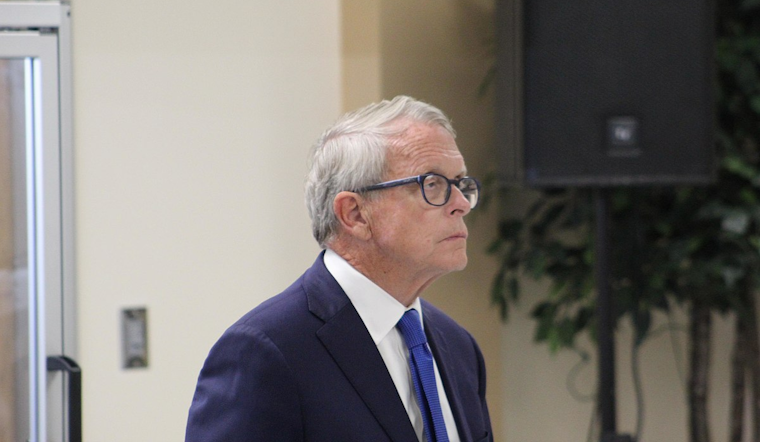
Ohio Governor Mike DeWine signed House Bill 15 into law on Thursday, marking a significant overhaul of the state's energy policy and putting an end to one of the last remaining pieces of the scandal-plagued House Bill 6 legislation from 2019.
The bipartisan legislation, introduced by State Representative Roy Klopfenstein (R-Haviland), makes sweeping changes to Ohio's energy landscape by eliminating subsidies for struggling coal plants and reducing tax burdens on various types of energy generation. "House Bill 15, sponsored by State Representative Roy Klopfenstein (R-Haviland), [aims] to amend the competitive retail electric service law, modify taxation of certain public utility property, and repeal parts of H.B. 6 of the 133rd General Assembly," according to the Daily Advocate & Early Bird News.
One of the most significant aspects of the new law is the repeal of subsidies for two Ohio Valley Electric Corporation (OVEC) coal plants, which have been costing Ohio ratepayers hundreds of millions of dollars annually. This repeal was celebrated by consumer advocates who have long argued against these subsidies, as reported by Common Cause Ohio, which noted that "Ohio ratepayers have already paid more than $468 million to prop up these aging coal plants."
The law represents a dramatic shift toward market-based energy solutions and away from the utility-favoring policies that characterized House Bill 6. "The newly signed bill paves the way for changes in competitive retail electric service law and the modification of taxation regarding specific public utility property," as stated by Hoodline Ohio. The legislation creates a more level playing field by prohibiting utilities from owning generation facilities, a move designed to encourage independent power producers.
Tax Reforms to Boost Energy Development
A key component of House Bill 15 is its significant tax reforms aimed at spurring energy generation investment. The law reduces the Tangible Personal Property Tax (TPPT) assessment percentage from 24% to 7% for production equipment and from 85% to 7% for energy conversion equipment, according to an analysis published by Lexology. These reductions apply to various entities including electric companies, rural electric cooperatives, and energy companies utilizing renewable sources.
The bill also creates "Priority Investment Areas" (PIAs) on former coal mines and brownfields, providing tax exemptions and expedited regulatory treatment for energy projects in these zones. "House Bill 15 will help incentivize renewable energy siting on some of Ohio's least usable land, including former industrial sites, landfills and abandoned mines," said Rebecca Mellino, climate and energy policy associate with The Nature Conservancy in Ohio, in a statement following the bill signing, according to The Nature Conservancy.
Regulatory Reforms and Consumer Protections
House Bill 15 introduces significant regulatory reforms designed to streamline energy development while protecting consumers. The legislation shortens the timeline for Ohio Power Siting Board decisions, requiring determinations within 150 days after applications are deemed complete, as analyzed by energy experts from Mondaq. If no decision is rendered within this timeframe, applications are automatically approved.
The law also overturns a decades-old Ohio Supreme Court decision that previously barred customer rebates for utility charges later found to be unlawful. According to Bricker Graydon LLP, the new law "establishes a consumer choice billing program, maintained by the PUCO," which permits consolidated billing by suppliers and enhances consumer protections.
Environmental Impact and Clean Energy Future
Environmental groups have praised certain aspects of House Bill 15, particularly its incentives for renewable energy development on brownfield sites. The Nature Conservancy highlighted that there are over 500,000 acres of brownfield land in Ohio potentially suitable for solar energy development, as mentioned in their press release following the bill's signing.
"Utility scale solar is an important part of an 'all of the above' energy strategy. We believe that incentives for renewable energy production in degraded areas just makes sense," said Bill Stanley, state director for The Nature Conservancy in Ohio, according to the organization. This approach allows for increased renewable energy production while preserving valuable agricultural land and natural habitats.
The End of House Bill 6 Legacy
The passage of House Bill 15 represents the final chapter in undoing the controversial House Bill 6, which was at the center of what federal prosecutors called likely the largest bribery scandal in Ohio history. That scandal led to the conviction of former House Speaker Larry Householder and several associates on federal racketeering charges for accepting approximately $60 million in bribes from FirstEnergy in exchange for passing favorable legislation.
While the nuclear subsidies from House Bill 6 were repealed in 2021, the coal plant subsidies remained in place until now, continuing to cost Ohio ratepayers. "This bipartisan bill includes the long overdue repeal of the Ohio Valley Electric Cooperative (OVEC) coal plant bailout instituted in House Bill 6 in 2019," noted Common Cause Ohio in their timeline of the scandal.
Economic Implications
Proponents of House Bill 15 argue that the legislation will help address Ohio's growing energy needs while supporting economic development. Representative Klopfenstein emphasized that the bill was designed to support Ohio's continued economic growth, particularly considering major investments from companies like Intel and Anduril Industries, as reported by Hoodline Ohio.
The Ohio Manufacturers' Association, which had commissioned studies on the economic impact of the OVEC subsidies, reported that these subsidies cost ratepayers approximately $200 million in 2024 alone. According to the Association, "Based on historical and predicted future electricity prices, RunnerStone estimates Ohioans could subsidize OVEC's utility owners over $1.1 billion total by 2030." With the repeal of these subsidies, consumers and businesses can expect to see lower electricity costs, potentially boosting economic activity across the state.
Legal Implications
House Bill 15 contains several provisions with significant legal implications for utilities and consumers. The reversal of the "Keko" Ohio Supreme Court decision is particularly noteworthy, as it establishes a new precedent that allows consumers to receive refunds for charges later found to be improper. This change represents a major shift in consumer protection within the utility space.
Additionally, the law clearly prohibits electric distribution utilities from owning generation facilities and participating in the competitive retail electric service (CRES) market. Lexology reports that "HB 15 specifies that utilities cannot own or operate electric generation facilities. This ban is meant to act as a signal to independent power producers that they need not compete with public utilities who can rate base generation." These provisions create legal boundaries that separate distribution from generation, aiming to promote market competition rather than vertically integrated monopoly utilities.
Looking Ahead
With Governor DeWine's signature on House Bill 15, Ohio's energy landscape is poised for significant transformation in the coming years. The law is expected to take effect in approximately 90 days, with most provisions becoming active in early August 2025, according to legal experts tracking the legislation.
Energy industry stakeholders, consumer advocates, and environmental groups will be watching closely to see how the law's implementation unfolds and whether it achieves its stated goals of increasing energy generation, improving affordability, and enhancing grid reliability. With this comprehensive reform, Ohio aims to position itself at the forefront of energy policy innovation while addressing the lingering effects of past corruption, as highlighted by The Statehouse News Bureau.





