

























































When academia meets real-world need, you get something like StormImpact, an Ohio State University-born weather analytics tool that's making it big by predicting storm threats to power grids across the nation. Recently acquired by Urbint, a major player in AI-driven infrastructure resilience, StormImpact is a prime example of Ohio State's push to bring practical solutions to the market. The brainchild of Professor Steven Quiring and his team, this platform developed from a mere campus research project to an essential utility industry aid, attests to the prowess of the university's innovation culture.
Quiring's dedication alongside Brent McRoberts and Scott Hull, the undergrad who cut his teeth on this back in 2016, has seen this project come to fruition. They nurtured this idea through competitive grants and leveraged the university's tech commercialization office. Ohio State's innovation just keeps on giving, not content to advance knowledge in insulated academic silos.
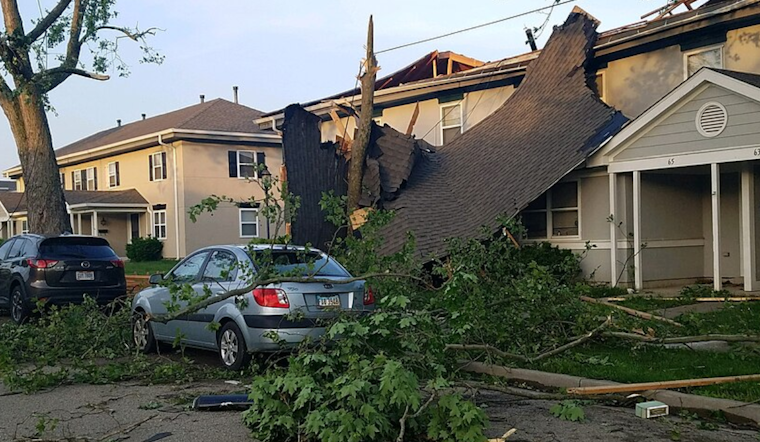
"StormImpact uses data-driven machine learning models to predict the impacts of weather on the electrical power system," Quiring said in a statement obtained by OSU News. "It combines forecasting and analytics to understand what storms are coming, how severe they could be, and what kind of damage we might expect." This proactive approach means that utility companies can move more swiftly to prepare for and respond to severe weather, thereby reducing power outages and enhancing public safety.
Proactive in its essence, the Ohio State Innovation Foundation-licensed StormImpact allows utilities to anticipate the scale of storm impact; it does this better equipping them to handle incoming crises by planning to repair and restore swiftly, the proof is in the power that stays on, the communities that remain lit, and the peace of mind granted knowing that a storm has been quantified.
The university is proud of such turning points. Matt Coleman, professor and chair of the Department of Geography at Ohio State, noted that Quiring's work is a significant first for his department and a sign of things to come in faculty innovation. "Steven is clearly leading the charge on that," he told OSU News. Ryan King, divisional dean of social and behavioral sciences, emphasized the societal benefits, highlighting how such academic endeavors extend their roots deeply into the fertile grounds of community and industry needs.
With Urbint's acquisition, StormImpact is set to widen its horizon even further, integrating its powerhouse tech into a national platform to secure infrastructure against nature's random, often furious tantrums. Quiring sees this as a personal and institutional triumph, an emblem of Ohio State University's resolute commitment to nurturing ideas that exceed the theoretical and academic, passionately melding into the concrete reality of everyday life.



