

























































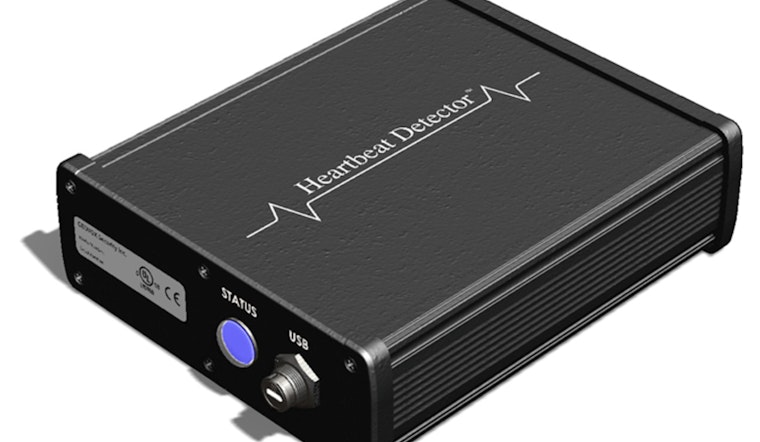
The longstanding partnership between Oak Ridge National Laboratory (ORNL) and Geovox Security Inc. has borne technological innovations critical to national and international security, particularly through the development of the Heartbeat Detector. This device, created using an algorithm developed at ORNL, detects individuals clandestinely hiding within vehicles at security checkpoints and is touted as the gold standard in its domain, according to a recent report from ORNL.
The operation method of the Heartbeat Detector entails placing the sensor on a vehicle as it approaches a checkpoint. The device then analyzes the vehicle’s suspension system vibrations to determine if there is a human heartbeat present inside the vehicle. Andrew White, president of Geovox Security Inc., emphasized the superiority of the Heartbeat Detector over other methods such as detection dogs, or X-ray machines, which may be considered impractical or unreliable in some scenarios. "The Heartbeat Detector technology created a new category of enclosed space detection and has since become the industry standard," White explained to ORNL.
When introduced in 1996, customers were required to acquire an integrated computer system alongside using the Heartbeat Detector. Yet, Geovox recognized the potential for greater market expansion by reimagining the product for modern use. The redesigned Heartbeat Detector now utilizes cloud-based software, freeing customers from the need to invest in cumbersome equipment and instead using a compact “black box” that integrates seamlessly with existing systems. The improvements have led to a more affordable system that maintains both accuracy and ease of use, with real-time results accessible from multiple locations.
"Working with Oak Ridge National Laboratory enabled this complete redesign," White said, acknowledging the lab's supportive role in licensing flexibility that allowed for the product's evolution, as reported by the ORNL. The partnership has been beneficial, resulting in a cost-effective and widely deployable security system—a point which Jennifer Caldwell, director of the Technology Transfer Office at ORNL, agreed with: "The security industry has rapidly transformed since this technology was licensed in 1996. ORNL is invested in supporting our partners as they adapt to the changing market."





