

























































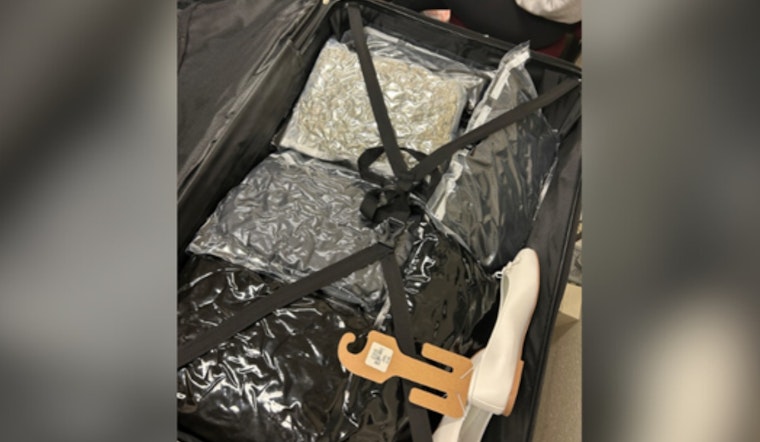
A massive haul of marijuana was stopped in its tracks at Pittsburgh International Airport, when U.S. Customs and Border Protection officers discovered over 50 pounds of the substance in a traveler's luggage. According to WPXI's report, Jetta Monet Corbett, a 30-year-old from Massachusetts, was preparing to board a London-bound flight on May 24 when the discovery was made.
The stash, weighing in at 54 pounds and estimated to fetch around $240,000 on the streets, could potentially have been worth much more in Europe. Customs and Border Protection officials told CBS News that the potency of the drug might have seen the value increase two to three times upon reaching its intended destination. Corbett is now facing serious charges, including one felony count for possession with intent to deliver a controlled substance and one misdemeanor count of possession of a controlled substance.
During routine checks, CBP officers often oversee passenger baggage. This time, their scrutiny unveiled several vacuum-sealed packages inside two suitcases. Subsequent tests confirmed the presence of marijuana. The Allegheny County police subsequently arrested Corbett at the departure gate following CBP's confirmation that the luggage belonged to her.
Bulk marijuana interceptions at Pittsburgh's airport are a rare occurrence. Still, CBP has noted a trend wherein transnational criminal organizations are attempting to exploit passenger flights to move large quantities of drugs. "Anyone considering making a quick buck by carrying bulk marijuana loads for drug trafficking organizations should realize that the consequences you face can be severe when Customs and Border Protection officers catch you," James Hindes, acting port director for the Port of Pittsburgh, said in a statement obtained by WPXI. Enforcing the law by stripping these criminal groups of their assets remains a priority for CBP, as the agency continues to thwart these illicit shipments.
Across the nation, CBP officers seized an average of 1,571 pounds of dangerous drugs last year, demonstrating their ongoing vigilance in protecting U.S. ports of entry from the scourge of illegal narcotics.



