

























































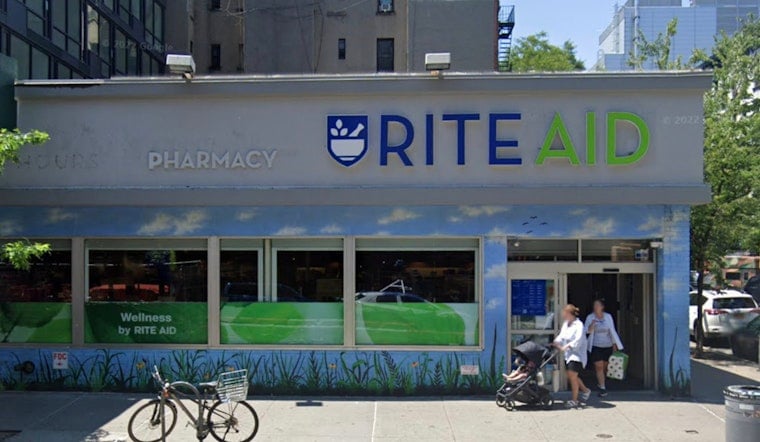
New Yorkers are confronted with the news that Rite Aid, a familiar pharmacy chain in the state, is closing all of its remaining stores. This follows the company's announcement that it has filed for bankruptcy for the second time and plans to sell off its assets, according to a Gothamist report. The closures will impact 178 stores across New York State, along with the shutdown of all Rite Aid distribution centers.
Customers, who have relied on Rite Aid for everything from medications to general merchandise, expressed their dismay at the closures. Eddie Neuwirth, a West Village resident for 50 years, told Gothamist, "I love this store and I'm very disappointed." He added, “It was a very good drugstore, they took care of me, they were very friendly and they went out of their way.” According to employees at one of the affected stores, there is widespread uncertainty regarding the future of their jobs.
AM New York reported that as Rite Aid embarks on a strategic sale process for substantially all its assets, employee layoffs are slated to begin on June 4. In light of the closures, Rite Aid has committed to working with customers to ensure that their prescriptions can be transferred to other pharmacies smoothly.
Matthew Schroeder, the CEO of Rite Aid, emphasized the company's legacy in a statement, "For more than 60 years, Rite Aid has been a proud provider of pharmacy services and products to our loyal customers." Although facing considerable financial challenges, further compounded by the changing retail and healthcare landscapes, Schroeder remains hopeful stating, "we are encouraged by meaningful interest from a number of potential national and regional strategic acquirors," as obtained by AM New York. The company pledges to ensure uninterrupted pharmacy services for customers and aims to preserve jobs for as many associates as possible, throughout this transition.
Rite Aid has faced ongoing financial challenges, including a $750 million loss in the previous fiscal year, which contributed to its first bankruptcy filing in 2023. The company has also been involved in several lawsuits related to the opioid epidemic, including a major case in Ohio, and has dealt with an increase in post-pandemic thefts that affected its operations. As the remaining stores close, customers in New York City and Long Island will need to find alternative pharmacy options.





