

























































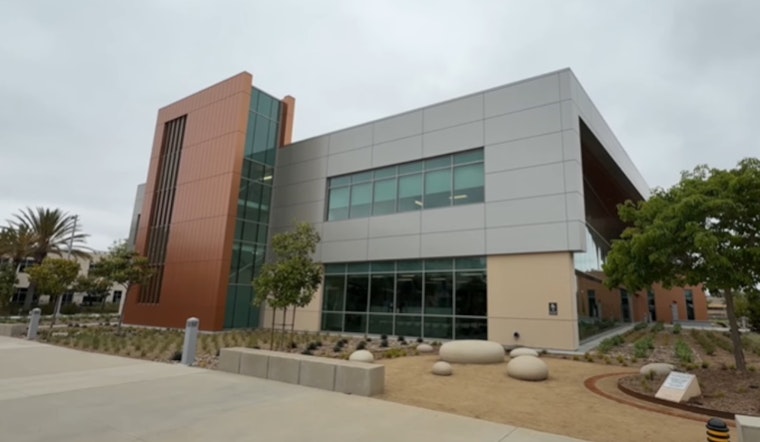
The San Diego community witnessed the inauguration of its latest weapon in the fight against infectious diseases with the grand opening of the new County Public Health Lab. Touted for its state-of-the-art facilities, the larger, 52,000 square foot lab is set to replace the outdated structure that used to inhabit Rosecrans—originally a shopping center not intended for scientific endeavors and closed due to structural aging, according to the County of San Diego.
The previous facility's limitations are now a thing of the past, with the lab designed to handle the increased demand for medical testing, which ranges from COVID-19, RSV, and flu to serious threats like anthrax, while also providing crucial checks on food, water safety, and animal rabies. The upgraded space accommodates nearly 90 employees and contractors and offers specialized areas including Biosafety-Level 3 Bioterrorism and TB Labs, a Genome Sequencing Lab, and the flexibility to scale up operations in response to public health emergencies, it is anticipated that the lab will conduct around 50,000 tests each year, the lab further cements its capability as a CDC Laboratory Response Network Lab for the region.
Before steel met sky, the County conducted a detailed workspace survey that laid the foundation for the lab's construction. Realizing that the COVID-19 pandemic altered work patterns, the survey identified opportunities for office space consolidation that allowed for the modernization and expansion at the COC campus. Twenty fewer offices led to a better use of space resulting in the reshuffling of 570 Public Health Services employees into a newly vacated building, and the money saved, averting a $150 million construction cost—was allocated towards erecting the public health lab and a robust parking structure complete with 725 spaces and 237 electric vehicle charging stations.
With its LEED platinum certification in sight, the lab is a guardian of public health and a testament to sustainability. It is fitted with solar panels and carefully implemented natural lighting and plumbing systems to conserve energy and water. Additionally, the construction team made strides in environmental protection by reducing embodied carbon by 23% through using materials such as low-carbon concrete, steel, and metal panels—an approach complemented by the County's laudable record of lowering greenhouse gas emissions by 47% since 2010.



