

























































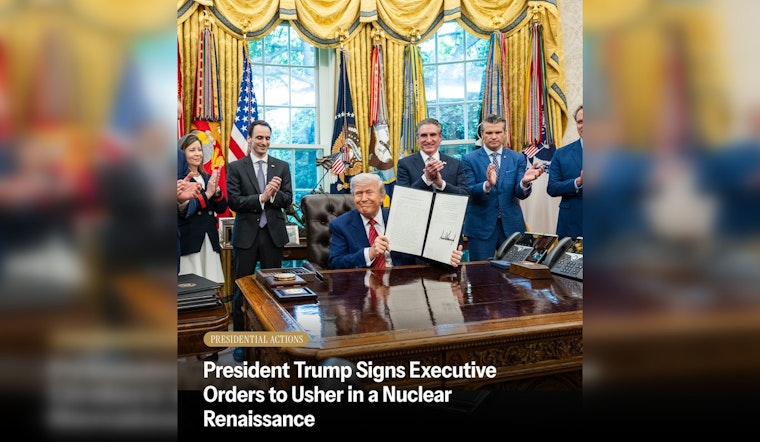
In an assertive move to reinvigorate America's nuclear energy program, President Trump signed a series of executive orders aimed at facilitating a nuclear future, as reported by an official White House opinion piece. This initiative is set to reduce the regulatory hurdles that have long curtailed innovation and growth in nuclear technology, streamline the testing and deployment of new reactor designs, and expand domestic nuclear energy capacity.
Public sentiment towards nuclear energy has seen its ebbs and flows, particularly after the Three Mile Island incident in 1979, which cast a shadow over the technology's potential. In response to a waning nuclear industry characterized by the decommissioning of the majority of Idaho National Laboratory reactors and a near dormant domestic nuclear supply chain, the Trump Administration has envisioned a resurgence in the atomic sector. The White House argues that "America can accomplish great feats in nuclear energy," yet acknowledges the past barriers created by overregulation and lack of support.
As the United States looks to raise its nuclear energy capacity from the current 100 GW to an ambitious 400 GW by 2050, four key strategies were delineated in this week's executive actions. The first involves leveraging DOE national laboratories to expedite the testing of new nuclear reactors. In accordance to the White House release, "fully leverage our DOE national laboratories" is considered an essential step in bringing theoretical reactor models to practical reality.
Moreover, with a goal of reinforcing national security, Trump's orders will facilitate the establishment of nuclear reactors on federally owned land to supply power for critical national needs. Simultaneously, the Nuclear Regulatory Commission is expected to undergo reforms to shorten licensing timelines to a snappy 18 months, maintaining nuclear safety while reducing procedural drag. Trump also pushes to revitalize the uranium mining and enrichment sectors in American territories, calling for an increase in domestic capabilities to match both civil and defense reactor demands.
The White House stands firm in the belief that these measures will not only secure a more robust and reliable source of energy for the United States but also will reassert the nation's prowess in nuclear technology on the global stage. Echoing Eisenhower's optimism, the present administration contends that, with the proper support, American scientists and engineers are capable of steering nuclear power towards becoming an efficient and economic powerhouse.





