

























































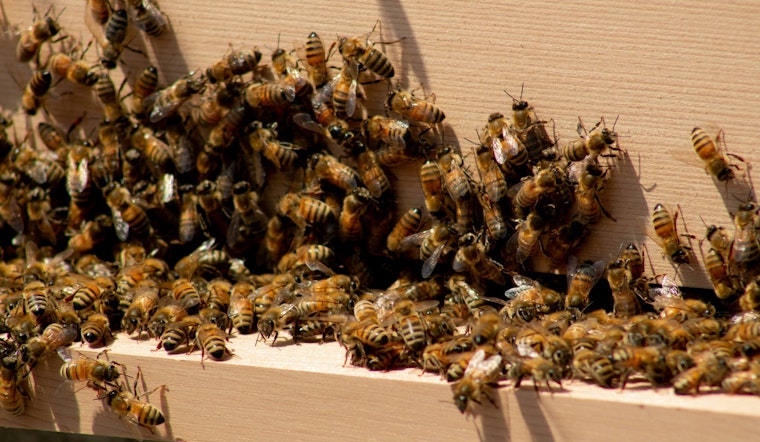
Times Square became the stage for an impromptu display of nature's own when tens of thousands of bees descended on the bustling area, prompting the New York Police Department to cordon off sections of the iconic neighborhood. This isn't the first bee buzz to hit the tourist hotspot; similar incidents have occurred periodically over the years. The latest swarm captured the attention of onlookers and social media alike with Michal Samuni Blank's video footage showing the winged visitors engulfing the area for approximately 15 minutes, according to FOX 5 NY. "Like a smoke of bees, because they were everywhere, all you saw was bees," Blank said.
Despite the dramatic scene, these swarms are usually not a threat to the public. Siri Chillara, a chemical engineer and urban beekeeper on the advisory council for Bee University, told Gothamist that these are bees "that are not necessarily violent or aggressive because they don’t have a hive to protect." Swarming, which is commonplace in summer, signals bees expanding their colonies and searching for new homes. The sight of bees in large numbers may be concerning to some, but Chillara emphasized the positive ecological implications, noting that most bees won't sting unless provoked and that only about 1-2% of people are severely allergic to bee stings.
When engulfed by a swarm, the best action is to remain calm and remove oneself from the vicinity. The New York City health department suggests moving away and if stung, to remove the stinger, then apply a cold compress to reduce swelling. In the case of severe allergic reactions, like difficulty breathing and swelling in the face, individuals should seek medical attention immediately. Bee swarms in high-traffic urban areas like Times Square typically draw a response from NYPD's beekeeping unit, which safely relocates the bees. Officer Mays, the NYPD’s resident beekeeper, was also on-site according to FOX 5 NY, continuing a tradition of managing these extraordinary urban occurrences with expertise.
The recurring phenomenon underscores a larger environmental message. Bees are critical to urban ecosystems, and the city has responded by creating sanctuaries such as "bee hotels" and "bee bunkers" to support at-risk species. These interventions aim to strengthen populations of the more than 200 species of bees living in the city, many of which find refuge in unconventional spaces such as buildings and green areas. "As long as you’re not stepping on them, or actively harming them, they don’t really have anything to do with us," Chillara explained to Gothamist. "They just have a job that they need to do, and then they go back home."




