

























































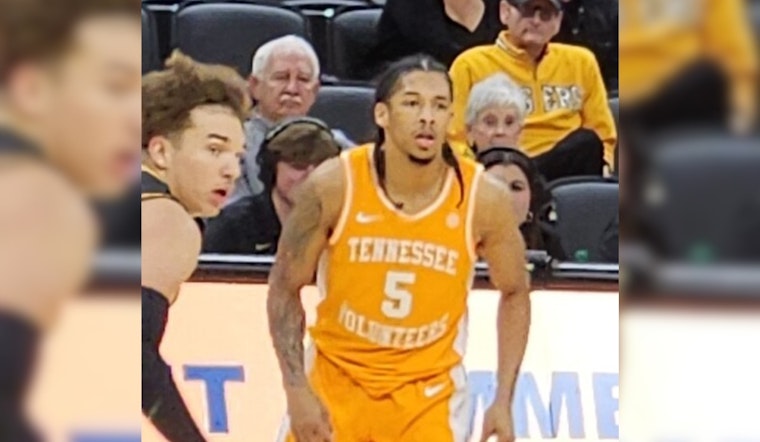
With the legal scrimmage between former University of Tennessee point guard Zakai Zeigler and the NCAA playing out in federal court, the Department of Justice has lobbed its comments into the fray. According to WATE, the DOJ declared that it's not picking sides but emphasized the necessity of a "flexible rule of reason" when considering the Four Seasons Rule about the Sherman Act, an antitrust law that governs such regulation.
Zeigler, the Vols' storied alumnus who led two trips to the Elite 8, is gunning for a fifth season on the hardwood while also capitalizing on the lucrative potential of his name, image, and likeness (NIL). His lawsuit claims the NCAA's cap on players' eligibility is an "unreasonable restraint of trade". The mooted NIL value for Zeigler's extra season is pegged at a sweet spot between $2 million and $4 million, suggesting his suit is anything but frivolous. As WBIR reported, a DOJ document insisted that such eligibility rules should be evaluated for their impact on competition, foreseeing that they could be "anticompetitive."
Nonetheless, while the DOJ's statement affirms the significance of a balanced examination, it also acknowledges potential competitive benefits of the Four Seasons Rule, including arguably enhancing the quality of the student-athlete experience. This perspective suggests that the eligibility restrictions also aim to maintain a level playing field amongst college teams, as detailed by WATE.
However, the antitrust division's noncommittal stance hasn't stopped them from hinting at the ways certain NCAA rules might also hinder competition. In a statement obtained by WBIR, the DOJ remarks that restrictions limiting athletes from competing or earning NIL income could undercut market fairness. The department's input arrives just ahead of the hearing scheduled for June 6 in the U.S. District Court for the Eastern District of Tennessee, setting the stage for a pivotal decision in the intersection of college athletics and antitrust law.
From a sporting lens, the outcome holds significant weight for Tennessee basketball. Saturday Down South points out that Zeigler, should he win eligibility for a fifth season, would bolster an already formidable Vols lineup. The consideration of such legal tussles, largely unprecedented in NCAA history, puts not just Zeigler's career trajectory in the spotlight, but the future of college athlete compensation itself.





