

























































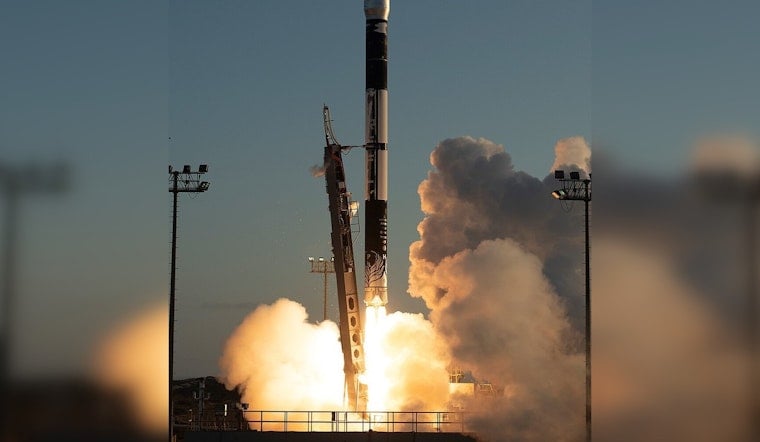
Firefly Aerospace, the Cedar Park-based rocket builder, has received a hefty investment to boost its orbit-reaching ambitions. Northrop Grumman Corporation is funneling $50 million into Firefly's coffers to support the development of a potent new launch vehicle, aptly named Eclipse. According to KVUE, this partnership underscores an alliance targeting the heavy lifting of more than 35,000 pounds into space, dwarfing the payload prowess of Firefly's Alpha rocket.
Insights shared by CBS Austin indicate that Eclipse is a culmination of proven technology and new advancements. The launch vehicle marries Northrop Grumman’s Antares rocket tech with Firefly's Alpha, including its flight-tested avionics, and it carries the promise of space station resupply missions, satellite launch capabilities, as well as supporting national security and scientific research.
Further cementing the strategic move, Jason Kim, CEO of Firefly Aerospace, articulated the firm’s appreciation for the investment, saying, "Firefly is incredibly grateful for Northrop Grumman’s investment that further solidifies our first-of-its-kind partnership to build the first stage of Antares 330 and jointly develop Eclipse." Echoing the importance of this collaboration, Kim's comments to KVUE underscored the merging of "two powerful forces coming together to transform the launch market with decades of flight heritage, a rapid, iterative approach and bold innovation."
The vision for Eclipse's capacity to propel payloads skyward is slated for realization with a target launch date in 2026 from Wallops Island, Virginia. As the mission profile broadens to include commercial spacecraft, Eclipse stands as a beacon of an increasingly competitive space launch market. This propulsion into the future is bolstered not only by Northrop Grumman's significant funding but also by an April contract from the Air Force Research Laboratory, which tasked Firefly with developing new material for rocket engine parts.





