

























































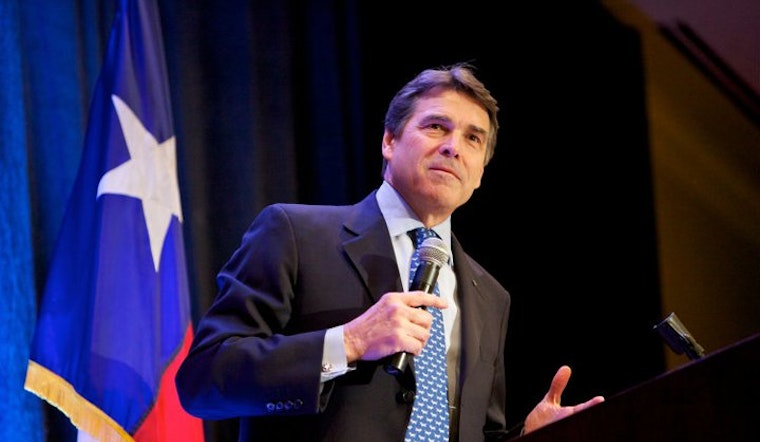
Former Texas Gov. Rick Perry, not new to the political scene nor a stranger to vocal opinions, has engaged in psychedelic research advocacy. As reported by KXAN, Perry has shifted his focus to promoting the therapeutic potential of ibogaine, particularly for veterans grappling with PTSD and addiction. Texas Gov. Greg Abbott has taken notice, recently approving $50 million for clinical research into the substance, with Perry's encouragement and collaboration with Bryan Hubbard, leader of the American Ibogaine Initiative.
Interviewed by Josh Hinkle, Perry admitted his initial skepticism but claimed an open-minded approach led him to support ibogaine research. "I listened, I studied, and I came to believe that it is the or could be a major, widespread solution for a lot of issues that we face in this country," Perry told KXAN. This is a significant departure from his previous stances, notably on immigration, where Perry showed a shift in perspective, blaming current public opinion and the Biden administration's policies for complicating matters regarding programs like the Dream Act, which he previously endorsed.
Addressing another facet of Perry's legacy, his penchant for strong words in unexpected moments recalls an infamous 2005 slip when he uttered the phrase "adios, mofo." According to an article from the Austin American-Statesman, this gaffe, which Perry thought was off-record, added an edge to his image—a contrast to the clean-cut veneer often expected from politicians. The Austin American-Statesman's article parallels this incident with current Texan political tactics, where bravado sometimes overcomes propriety, a trend Abbott himself seems to embrace with his own blunt public statements.
Perry also weighed in on Abbott's deployment of the National Guard during protests, asserting the need for safety but emphasizing First Amendment rights. While commenting on Texas law and order, Perry balanced his rhetoric, perhaps mindful of past experiences where unfiltered expressions led to unintentional controversy. As Perry and Abbott continue to inform the state's discourse, the intersection of politics and expression in Texas remains as complicated and charged as ever, and the use of forceful language seems embedded in the Texan political style, as observed by the Austin American-Statesman.
Concluding his remote interview with a backdrop of Texas A&M memorabilia, Perry gave nods to the institution's outgoing and incoming chancellors, commending their historical and anticipated contributions. As the Texas political scene continues to evolve, Perry's multifaceted involvement—from his verbal blunders of the past to his current innovative endeavors—keeps him a figure to watch in the state's ongoing story.




