

























































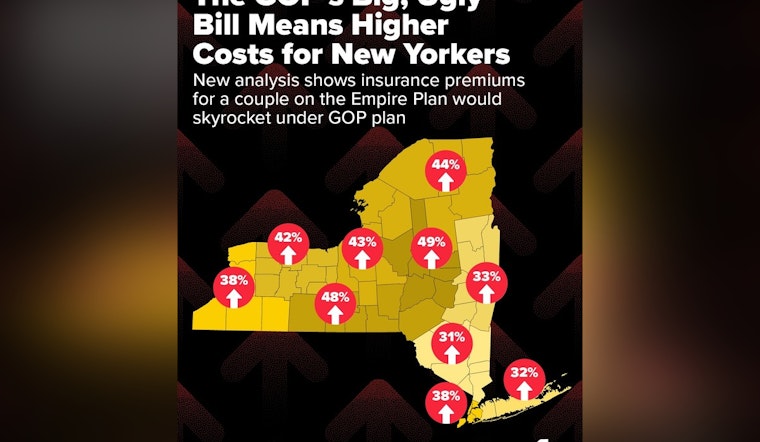
New York Governor Kathy Hochul has taken a public stand against what's being called the GOP's 'Big Ugly' Reconciliation Bill, warning of dire consequences for healthcare in the state should the proposed legislation pass. Data highlighted by Hochul suggests that the bill could strip health coverage from an estimated 1.5 million New Yorkers, increase uninsured rates and lead to significant rises in monthly health insurance premiums for residents, according to information released by the Governor's Office.
The potential financial ramifications are stark, with average premiums in New York set to rise by 38 percent for approximately 140,000 low-income individuals and families that currently benefit from enhanced premium tax credits under the American Rescue Plan, translating to an additional monthly cost of $114 per person and $228 for a couple, not to mention the bill also threatening to siphon $13.5 billion annually from the state's healthcare funds which jeopardizes the health insurance access of New York's 1.6 million Essential Plan enrollees. In a statement obtained by the Governor's Office, Hochul asserted, "If New York’s Republican delegation won’t stand up for their own constituents, I will."
Moreover, the elimination of these tax credits is expected to cause a 4.3 percent increase in insurance premiums for over 100,000 New Yorkers who buy insurance in the individual commercial market but are ineligible for tax credits. The potential for reduced market participation by healthy individuals raises additional concerns about a subsequent hike in insurance rates. New York State Health Commissioner Dr. James McDonald highlighted the broader impact of the cuts in a statement obtained by the Governor's Office, "When people lose health insurance, they risk going without needed health care or suffering financial hardship."
Concerns extend beyond premium increases; with estimates indicating that up to 80,000 individuals could lose their coverage due to the bill, onerous administrative burdens that may cost the state more than $10 million are on the horizon, and many consumers facing significant new red tape that will make it harder to enroll in and renew coverage, additionally the legislation would centralize authority, reducing the State’s ability to manage its own health plan marketplace effectively. Danielle Holahan, Executive Director of NY State of Health, emphasized the cascading negative consequences of these changes, telling the Governor's Office, "Already struggling providers, especially in rural parts of the state, might not be able to sustain operations under this proposal, further restricting New Yorkers’ access to care."
New York, which boasts a low uninsured rate of less than 5 percent and over 6.7 million individuals enrolled in coverage through its marketplace, could see these figures regress, undoing years of progress in extending healthcare coverage and affordability. The proposed GOP reconciliation bill not only threatens existing coverage but poses a significant disruption to New Yorkers' access to affordable healthcare, a concern echoed by state leaders and health care professionals alike.




