

























































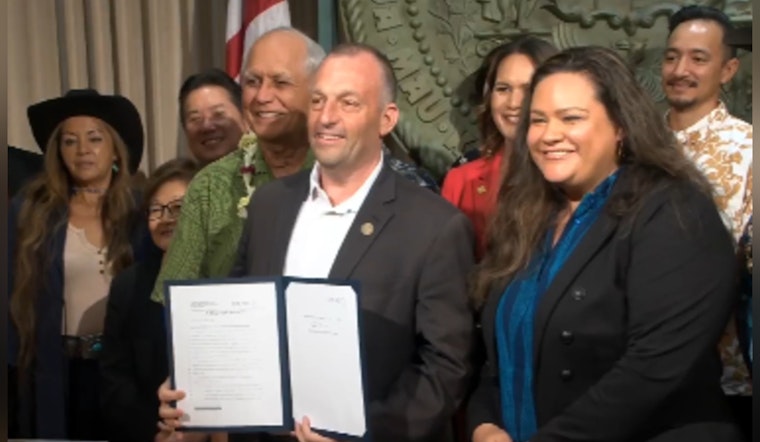
Governor Josh Green recently signed several bills to strengthen Hawaiʻi's agricultural system and biosecurity efforts. Among them is Senate Bill 1249, or Act 235, which creates a temporary Agricultural Enforcement Pilot Program on Oʻahu and Hawaiʻi Island to address agricultural crimes and gather data for possible expansion. The law also introduces stricter penalties for repeat offenders involved in activities like livestock theft and unauthorized hunting. Senator Tim Richards stated, “These are all about striving toward food, self-reliance and food security. Our state legislature is taking a firm stance to support agriculture and our local industries and food production,” according to the Hawaiʻi Department of Agriculture.
House Bill 427 (Act 236) renames the Hawaiʻi Department of Agriculture to the Department of Agriculture and Biosecurity to reflect its expanded responsibilities in managing invasive species and diseases. The law gives the department authority to declare biosecurity emergencies and manage transitional facilities to enforce biosecurity rules. Governor Green said, “With the increasing frequency of natural disasters and growing biosecurity threats, safeguarding our resources and environment is a top priority for my administration.”
House Bill 774 (Act 237) creates a food and product innovation network in Hawaiʻi to help small businesses by providing access to facilities and expert support. Representative Kirstin Kahaloa said, “HB 774 is transformative for Hawaiʻi’s farmers and food entrepreneurs — empowering them to innovate, grow and proudly share their unique products with the world.” Two other related bills were also signed: House Bill 534 (Act 238) focuses on labeling requirements, and House Bill 496 (Act 242) supports the māmaki tea industry. Bill texts, photos from the signing ceremony, and a presentation slide deck are available to the public, as reported by the Hawaiʻi Department of Agriculture.




