

























































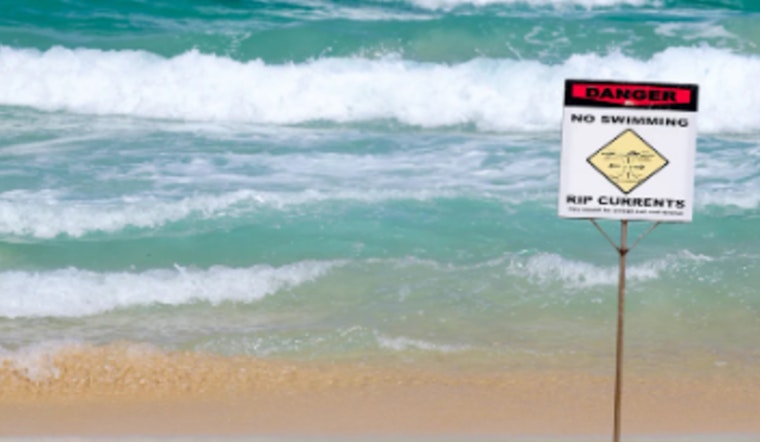
For many, a day at the beach symbolizes leisure and tranquility, but an undercurrent of risk persists beneath the waves. As recently reported by Hillsborough County, rip currents represent a dominant hazard, accounting for about 80% of all beach rescues each year. This statistic underscores the imperative for swimmers to understand, and respect the ocean's power.
The threat of rip currents might not be obvious at first glance, but their impact is significant, causing tens of thousands to be rescued on an annual basis. Contrary to some misconceptions, rip currents are not related to tides but are, fast-moving water channels caused by the ebb, and flow of waves along the shore. When waves break and push water onto the beach, this water needs to flow back to the ocean, frequently doing so via these deeper channels.
Knowledge, it seems, can be as crucial as swimming ability when it comes to handling a rip current encounter. The key is to avoid panic; fear often leads to rash actions that drain energy and resolve. "If you find yourself in the grip of a rip current, the first step is to remain calm," according to the report. While instincts may urge a direct swim back to shore, experts advise against it, as it's typically futile and exhausting.
Instead, there are two safer options: swim parallel to the shore until free from the current, then angle back to the beach; or simply tread water and float, signaling for help. Since rip currents do not pull swimmers under, these methods can allow one to "break the grip of the rip," the report suggests. Moreover, these currents are generally less than 80 feet wide, suggesting that escape might be closer than one thinks.
Preventive measures also play a pivotal role in beach safety. Tips such as swimming only in lifeguard-monitored areas, obeying signage, and maintaining a distance from structures like piers and jetties can significantly reduce the risk of an incident. If a swimmer appears caught in a rip current, onlookers should alert a lifeguard and offer floating aids while ensuring their safety.





