

























































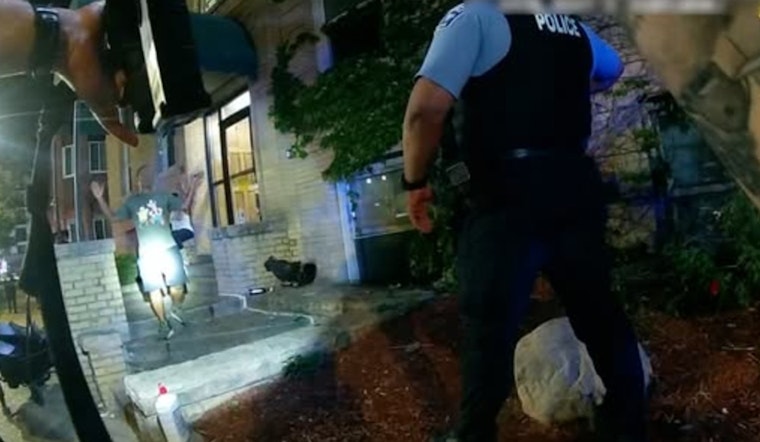
Minneapolis is harnessing technology in its ongoing battle against gun violence, with the Minneapolis Police Department (MPD) recently demonstrating the capabilities of its ShotSpotter system—a network of acoustic sensors designed to detect and pinpoint the location of gunfire incidents across the city. In a social media post shared by the MPD, they highlighted an incident where officers were alerted to a situation involving a suspect discharging a firearm into the air at the intersection of 15th Street & 1st Avenue South.
According to the MPD's Facebook post, the ShotSpotter system quickly informed officers of the gunfire, allowing them to strategically tap into the department's Milestone video surveillance system to safely assess the scene from a distance. The surveillance footage, accessed in real-time, revealed a suspect actively shooting rounds into the air. The speedy coordination of technology tools and swift police response led to the suspect's arrest without further incident. "Thanks to fast coordination and powerful tech, they were able to move in safely and make an arrest without incident," the MPD stated on Facebook.
This latest operation underscores the department's commitment to integrating advanced technology into its public safety strategies. ShotSpotter has become increasingly relied upon as a foundational tool in pinpointing the origins of gunshots, with the goal of bolstering rapid response capabilities and potentially deterring crime through technological omnipresence. The police department views the integration of such tech as vital in not only speeding up their response times but also in ensuring the safety of officers and residents alike.
The intersection of technology and law enforcement practice raises questions about the balance between policing efficiency and community privacy. With cutting-edge tools like ShotSpotter and Milestone, MPD has increased its capacity to quickly address firearms incidents, potentially saving lives in the process. However, this technological adoption continues to move forward amidst broader conversations about surveillance, civil liberties, and the role of policing in urban communities. "This is another great example of how technology and teamwork help us respond faster, smarter, and safer," the MPD conveyed, underlining their stance on the positive impact of such systems in modern policing approaches.



