

























































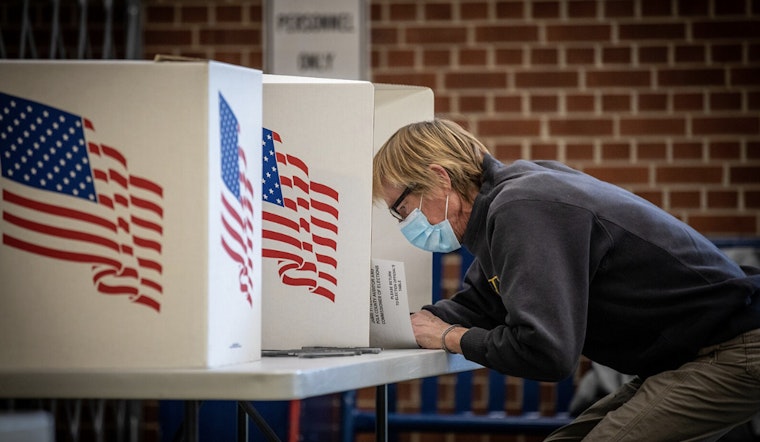
As New York City gears up for its next foray into ranked-choice voting this June, a method that promises more nuanced democracy is still tripping up voters. Despite being two election cycles in, the adoption of Ranked Choice Voting (RCV) has had its fair share of hiccups, as reported by West Side Spirit. Many residents are yet to get the hang of this system where they rank their top five choices in primary and special city elections—an approach aimed at broadening voter choice and reducing negative campaigning.
For the uninitiated, though the concept is relatively straightforward, the mechanics can be perplexing. In RCV, a candidate clinches the seat with more than 50% of first-choice votes. If that doesn't happen, the counting continues in rounds with the lowest-ranked candidates getting eliminated and their votes redirected to voters' next preferences. Gothamist details the do's and don'ts of the process, emphasizing that voters can't rank a single candidate multiple times or pick more than one candidate for a rank without spoiling their ballot.
New York City's inaugural major test of RCV during the 2021 mayoral race proved both its potential and its complexities—as it took multiple rounds of tallying before a winner emerged. As reported by West Side Spirit, Eric Adams eventually won the Democratic race after an eight-round count, a testament to the iterative nature of RCV. However, some voters remain unaware that they don't have to fill all five ranks for their ballots to count, while others mistakenly believe they can repeatedly rank the same candidate.
In face of this persistent confusion, New York City officials have been doubling down on outreach to enlighten voters about ranked-choice voting. According to West Side Spirit, educational campaigns including videos, workshops, sample ballots, and multilingual resources are rolling out across boroughs.
The NYC Campaign Finance Board is also providing interactive tools on vote.NYC to help clarify the voting process. "We expect a free and fair election with [ranked-choice] reporting July 1 until we certify the election later in the month," Vincent Ignizio, deputy chief of the Board of Elections, told Gothamist.
While RCV is not utilized for general or presidential elections, nor for state and federal office races, its presence in city primaries and special elections is undisputed. With continued voter education and resources becoming more readily available, the question remains not of the system's legitimacy but of its ability to be fully grasped by the electorate it seeks to empower.





.jpg)